GLP-3 R is a synthetic 39-residue modified and lipidated peptide engineered for multi-receptor activity. Its structure incorporates noncanonical amino-acid modifications and a lipid-containing side chain. These modifications differentiate the molecule from naturally occurring GLP-1, GIP, and glucagon peptides and contribute to its distinctive triple-receptor pharmacology. IUPHAR/BPS describes the reference compound as a lipidated, modified peptide targeting GCGR, GIPR, and GLP-1R.
C₂₂₁H₃₄₂N₄₆O₆₈ KEGG reports this molecular formula for the reference modified peptide.
Molecular Weight
Approximately 4731.34 g/mol KEGG reports a molecular weight of 4731.34 and exact mass of 4728.4718.
CAS Number
2381089-83-2 This CAS number is independently reported on the Krause Analytical COA for the tested material.
Amino Acid Sequence
Modified 39-residue sequence: Y–Aib–QGTFTSDYSI–2-Me-Leu–LDK–[Lys(AEEA-γGlu-C20 diacid)]–AQAibAFIEYLLEGGPSSGAPPPS-NH₂ This is not a simple conventional amino-acid sequence because the molecule incorporates Aib residues, α-methyl-leucine, a modified lysine carrying a lipid-linked side chain, and a C-terminal serinamide. KEGG reports the 39-residue backbone and identifies the molecule as a modified peptide.
Primary Molecular Target
GLP-1 Receptor (GLP-1R) / GIP Receptor (GIPR) / Glucagon Receptor (GCGR) All three are established molecular targets of the reference compound.
GLP-1R-expressing cell systems
GIPR-expressing cell systems
GCGR-expressing cell systems
Receptor-transfected cellular models
cAMP reporter systems
Pancreatic islet models
Adipocyte models
Hepatic metabolic models
Metabolic phenotyping systems
Receptor-binding models
Comparative incretin-receptor systems
Preclinical metabolic research models
For the actual OPTMZ sample, directly measured analytical endpoints were chromatographic purity, identity, peptide content, and endotoxin concentration.
Analytical Characterization
Independent analytical testing of OPTMZ Peptides GLP-3 R 15 mg, batch/lot 2026/02, by Krause Analytical reported:
Chromatographic Purity: >99.9%
Measured Content: 13.8 mg
Label Claim: 15 mg
Percent of Label: 92.0%
Identity: Confirmed by mass-spectral match
CAS Number: 2381089-83-2
Analysis Method: HPLC-UV-MS
Endotoxins: <0.5 EU/mL Endotoxin Method: USP
Lab Number: 205079
Project: 145211
Batch/Lot: 2026/02
Date Received: April 28, 2026
Report Issued: May 8, 2026
The laboratory states that values are reported on a per-vial basis unless otherwise noted.
All research peptides provided by OPTMZ Peptides are supplied strictly for laboratory research applications and are not intended for medical use. These materials are not approved by the U.S. Food and Drug Administration (FDA) to diagnose, treat, cure, or prevent any disease. By purchasing, the buyer confirms use strictly for scientific research purposes and not for human or animal consumption.
Product Overview
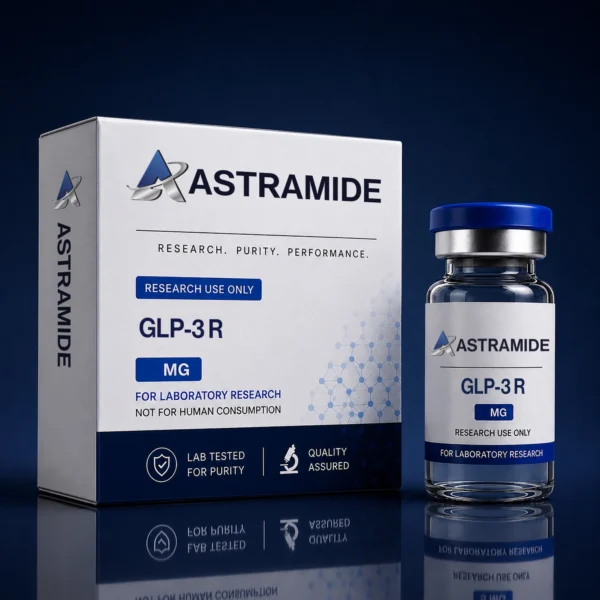
GLP-3 is an investigational research peptide examined in controlled laboratory environments for its interaction with multiple receptor systems, including GLP-1 receptors, GIP receptors, and glucagon receptors.
It is studied in in vitro research models to evaluate multi-receptor signaling activity, metabolic pathway interactions, and hormonal signaling dynamics at the cellular level.
Technical Specifications
CAS Number: 2381089-83-2
Molecular Formula: C₂₂₁H₃₄₂N₄₆O₆₈
Molecular Weight: 4845.44 g/mol
PubChem ID: 474492335
Purity: ≥99% (HPLC tested)
Form: Lyophilized powder
Synthesis Method: Solid-phase peptide synthesis
Analytical & Testing
Each batch of GLP-3 undergoes high-performance liquid chromatography (HPLC) and mass spectrometry (MS) analysis to verify purity, identity, and analytical consistency. A corresponding Certificate of Analysis (COA) is available for each batch.
Handling & Storage
This compound should be handled by qualified professionals in controlled laboratory environments. Proper storage conditions should be maintained to preserve compound stability and structural integrity.
Research Context
In preclinical and laboratory research models, Reta (GLP-3) has been examined across metabolic, endocrine, and systemic research systems. Research focus includes:
GLP-1 receptor signaling pathways
GIP receptor activity models
Glucagon receptor interactions
Multi-hormone signaling mechanisms
These observations are limited to controlled experimental environments and support ongoing laboratory investigations.
Research Application Scope
GLP-3 continues to be evaluated for its relevance in experimental biology, particularly within studies involving multi-receptor signaling, metabolic pathway analysis, and integrated biochemical interactions.
Use Statement
For laboratory research use only. Intended strictly for in vitro research applications.
Disclaimer
All products currently listed on this site are for research purposes ONLY.




Reviews
There are no reviews yet.