Retention time matched a certified reference standard
CHROMATOGRAPHIC PURITY
Pass, at or above 99% (numeric value not printed on the certificate)
FILL WEIGHT
300 of 300 vials conform to the 5.00 mg target fill
Analytical characterization
Every result against its specification.
Lot PLB-IPA5-20260623-02 · 5 mg vial · pH Solutions Lab · reported 6 July 2026 . The bar shows where the reported result falls against Astramide’s published release criterion. The notch marks the criterion.
Within criterionAbove criterionNot on this COA
Test
Method
Criterion
Result
Result vs criterion
Status
Identity
HPLC (274 nm), retention time
Match to the labelled compound
Retention time matched a certified reference standard
WITHIN SPEC
Chromatographic purity
HPLC (274 nm), area %
at or above 99.0%
Pass, at or above 99% (numeric value not printed on the certificate)
WITHIN SPEC
Fill weight
Gravimetric
5.00 mg target fill
300 of 300 vials conform to the 5.00 mg target fill
WITHIN SPEC
Appearance
Visual
white to off-white lyophilized powder
White to off-white lyophilized powder cake, free of visible particulates
WITHIN SPEC
Water activity
Water activity meter
below 0.65 aw
0.24 aw, pass
WITHIN SPEC
Microbial panel
qPCR
not detected
Pass. Total aerobic count, Enterobacteriaceae, total yeast and mold not detected in 1 g
WITHIN SPEC
Mycotoxins
LC-MS
within laboratory limits
Pass. Aflatoxins B1, B2, G1, G2, total aflatoxins and ochratoxin A not detected
WITHIN SPEC
Residual solvents
GC headspace
within ICH Q3C limits
Pass, below ICH Q3C Class 2/3 limits (tested on the bulk material at incoming inspection)
WITHIN SPEC
Heavy metals
ICP-MS
within USP <232> limits
Pass, As, Cd, Pb, Hg below USP <232> limits (tested on the bulk material at incoming inspection)
WITHIN SPEC
Net content
—
Not reported on this certificate
NOT REPORTED
Endotoxin
LAL
—
Not reported on this certificate
NOT REPORTED
Sterility
—
Not reported on this certificate
NOT REPORTED
Values are reported per vial unless otherwise noted. Every figure here is taken from the batch Certificate of Analysis and nothing else.
Certificate of Analysis
Ipamorelin Pro · Lot PLB-IPA5-20260623-02 · 5 mg vial · Lab No. PLB-IPA5-20260623-02
pH Solutions Lab · 2 pages · served inline, not a screenshot
Quick reference
How to read this report
Same six keys on every Astramide product page. Only the values change.
1Lot numberMatch it to the number printed on your vial. If they differ, this report is not for your vial.
2IdentityMass spectrometry confirms the molecule is the one on the label. It conforms or it does not. There is no partial result.
3Chromatographic purityThe share of the material that is the target peptide. A purity figure quoted without a method is not a purity figure.
4Net contentHow much peptide is in the vial, as measured by the laboratory. A different question from purity.
5EndotoxinMeasured against a ceiling, not a floor. Sensitivity differs by laboratory, so results are not compared across labs.
6Laboratory, method, dateWho ran it, on what instrument, and when. A report with no named laboratory or no date is not a report.
Molecular profile
Ipamorelin Pro, in structural terms.
Sequence
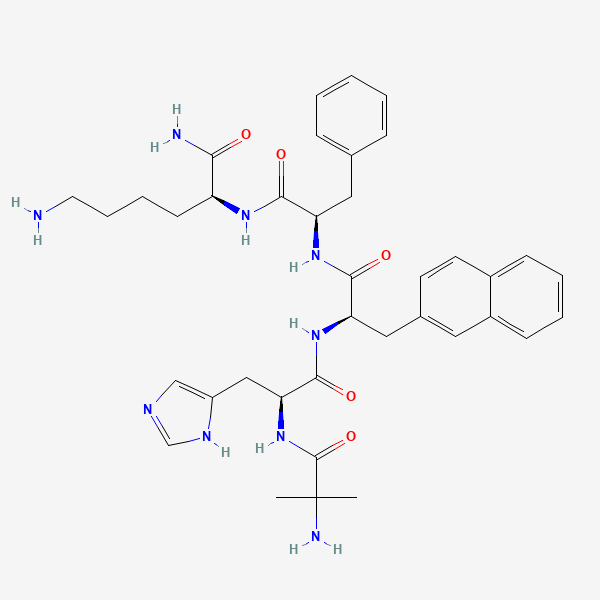
Aib-His-D-2-Nal-D-Phe-Lys-NH₂
Molecular formula
C₃₈H₄₉N₉O₅
Molecular weight
Approximately 711.9 g/mol
CAS number
170851-70-4
Peptide length
5 amino acids
Structure type
Linear peptide
Parent sequence
Derived from GHRP-1 by removing its central Ala-Trp dipeptide (Raun et al., 1998); not a fragment of a natural protein
Primary molecular target
Growth hormone secretagogue receptor type 1a (GHS-R1a), also called the ghrelin receptor. Pharmacological profiling with GHRP and GHRH antagonists showed that ipamorelin acts through this GHRP-type receptor, not the GHRH receptor (Raun et al., 1998).
Ipamorelin is a synthetic linear pentapeptide, Aib-His-D-2-Nal-D-Phe-Lys-NH₂, with a C-terminal lysinamide. It contains three non-standard residues: α-aminoisobutyric acid (Aib), D-2-naphthylalanine and D-phenylalanine. It was identified within a series of compounds derived from GHRP-1 by removing that peptide's central Ala-Trp dipeptide. Its formula is C₃₈H₄₉N₉O₅ and its molecular weight is about 711.9 g/mol.
The growth hormone secretagogue receptor was cloned from pituitary and hypothalamus in 1996 as the target of synthetic GH-releasing peptides (Howard et al., 1996). Its endogenous ligand, ghrelin, was identified three years later as an acylated peptide from the stomach (Kojima et al., 1999).
Ipamorelin came out of a chemistry programme built on GHRP-1. In primary rat pituitary cells it released growth hormone with potency and efficacy similar to GHRP-6, and antagonist profiling showed it acts through a GHRP-type receptor (Raun et al., 1998).
The same study examined selectivity in swine. GHRP-6 and GHRP-2 raised ACTH and cortisol, but ipamorelin did not, even at doses more than 200-fold above its ED50 for GH release, and none of the compounds changed FSH, LH, prolactin or TSH (Raun et al., 1998). This selectivity is why ipamorelin is used as a reference compound in ghrelin receptor and pituitary research.
These are published research systems. They do not describe approved clinical applications, and they do not establish efficacy or safety in humans.
Cited literature
Raun K, Hansen BS, Johansen NL, Thøgersen H, et al., 1998. Ipamorelin, the first selective growth hormone secretagogue. Eur J Endocrinol. PMID 9849822. https://pubmed.ncbi.nlm.nih.gov/9849822/
Howard AD, Feighner SD, Cully DF, Arena JP, et al., 1996. A receptor in pituitary and hypothalamus that functions in growth hormone release. Science. PMID 8688086. https://pubmed.ncbi.nlm.nih.gov/8688086/
Kojima M, Hosoda H, Date Y, Nakazato M, et al., 1999. Ghrelin is a growth-hormone-releasing acylated peptide from stomach. Nature. PMID 10604470. https://pubmed.ncbi.nlm.nih.gov/10604470/
Evidence level
Ipamorelin's receptor pathway and selectivity profile are established in cell-culture and animal-model studies, and the receptor and its endogenous ligand are well characterized. Statements on this page describe experimental systems, not outcomes in humans.
Handling and storage
As supplied
Lyophilized powder in a sealed vial. Held in laboratory-rated freezers from arrival to shipment.
Storage
Store per the conditions printed on the vial label. Avoid heat, moisture and repeated temperature cycling.
Handling
For qualified professionals in controlled laboratory environments, following validated laboratory procedures.
Frequently asked questions
About this compound and its batch data.
What is ipamorelin?
Ipamorelin is a synthetic pentapeptide, Aib-His-D-2-Nal-D-Phe-Lys-NH2, that acts as an agonist of the ghrelin receptor (GHS-R1a). Its formula is C38H49N9O5, its molecular weight is about 711.9 g/mol and its CAS number is 170851-70-4 (PubChem CID 9831659). Ipamorelin Pro is supplied as a lyophilized powder. Sold for research use only.
What has ipamorelin been examined for in published research?
In primary rat pituitary cells, ipamorelin released growth hormone with potency and efficacy similar to GHRP-6, and antagonist profiling showed it acts through a GHRP-type receptor (Raun et al., 1998, PMID 9849822). That receptor, GHS-R1a, was cloned in 1996 (Howard et al., PMID 8688086). Astramide makes no claim about outcomes in humans.
Why is ipamorelin described as a selective secretagogue?
In swine, GHRP-6 and GHRP-2 raised ACTH and cortisol alongside growth hormone, but ipamorelin did not, even at doses more than 200-fold above its ED50 for GH release. None of the compounds changed FSH, LH, prolactin or TSH (Raun et al., 1998, PMID 9849822). That profile makes it a common reference compound in ghrelin receptor research.
What purity does the current Ipamorelin Pro lot reach?
Lot PLB-IPA5-20260623-02 passed the HPLC purity specification of at or above 99% at 274 nm, on certificate PLB-COA-IPA5-20260623-02 from pH Solutions Lab, issued 6 July 2026. The certificate reports the result as a pass against that specification rather than a numeric value. Retention time matched a certified reference standard. The certificate is published on this page.
How much ipamorelin is in the vial?
The current Pro lot is the 5 mg vial. The certificate reports a 5.00 mg target fill weight, with all 300 of 300 vials in the lot conforming. Net peptide content was not separately measured on this certificate, so Astramide does not publish a measured content figure for it. Fill weight and chromatographic purity are separate measurements.
How should ipamorelin be stored for research use?
Lyophilized ipamorelin is stored at -20°C and protected from light. Once reconstituted, the solution is held at 2 to 8°C and used within 14 to 30 days. Repeated temperature cycling and exposure to moisture should be avoided, because both can affect peptide stability and the comparability of experimental results.
How is Astramide's Ipamorelin Pro tested?
Lot PLB-IPA5-20260623-02 was tested by pH Solutions Lab, an independent ISO/IEC 17025:2017 accredited laboratory. The certificate reports HPLC purity, fill weight, appearance, a qPCR microbial panel, six mycotoxins, water activity, and residual solvents and heavy metals on the bulk material. All passed. Net content, endotoxin and sterility are not reported. Results apply only to this lot.
What does Pro Series mean for Ipamorelin Pro?
Ipamorelin Pro is part of the Astramide Pro Series. It is American-made, synthesized in the USA, and moves by domestic ground and air only, with no ocean freight. It is released under its own lot, and only when HPLC purity measures at or above 99%. The full certificate for each lot is published on this page.
Research use only
This product is intended strictly for in-vitro laboratory research conducted by qualified professionals.
It is not intended for human or animal consumption, clinical use, or therapeutic application.
The statements on this page have not been reviewed by the FDA. These research peptides are not intended
to diagnose, treat, cure, or prevent any disease. Research Use Only.
Select options
This product has multiple variants. The options may be chosen on the product page
Your Privacy Choices
We use analytics and advertising tools to understand how visitors find us and which campaigns work. You can turn either off. Your choice is saved in this browser.
AnalyticsGoogle Analytics and order source tracking. Helps us see how the site is used.
Off (browser signal)
AdvertisingMeta and X pixels, and server-side events. Opting out also opts you out of "sharing" and targeted advertising under state privacy laws.
Off (browser signal)
Your browser is sending a Global Privacy Control signal, so analytics and advertising are off. To change this, turn off the signal in your browser settings.
Strictly necessary cookies (cart, sign-in, checkout, entry acknowledgment) always stay on. See our Privacy Policy.
Know what's in the vial before you order.
Every Astramide batch is tested by an independent US lab. The report goes public before the batch goes on sale, so you can check the numbers first.
Independent US lab test on every batch
Full report published before it goes on sale
Kept frozen, shipped from Austin, Texas
GLP-3RLot 2026/02 · May 8, 2026
>99.9%purity by HPLC-UV/MS
90%Minimum 98.0%100%
Identity: Confirmed by mass specEndotoxin: Below 0.5 EU/mL

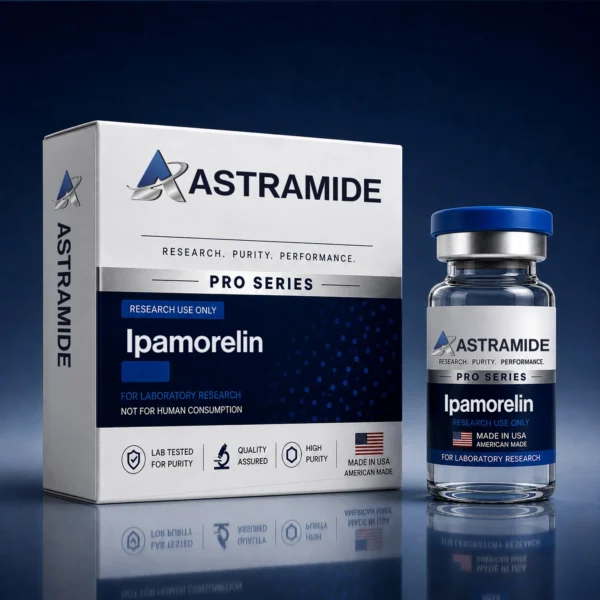
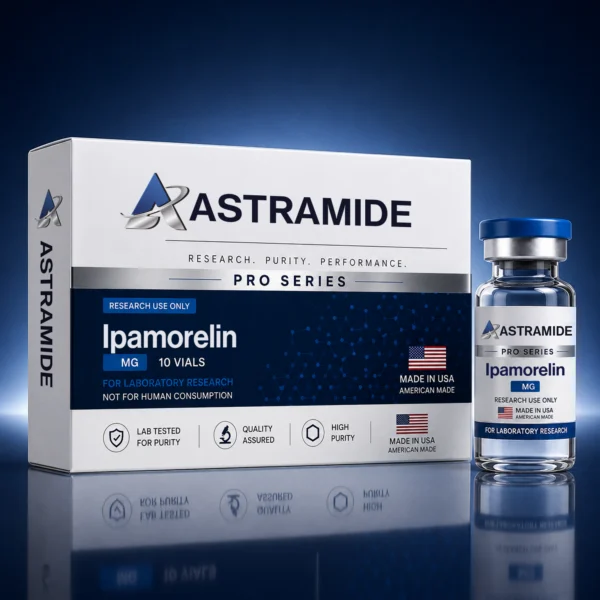
 Pro Series
 Pro Series
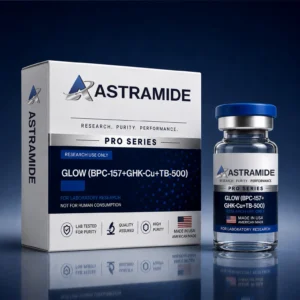 Pro Series