
| Pcs | Single Vial, Pack of 10 |
|---|---|
| Strength | 10mg |
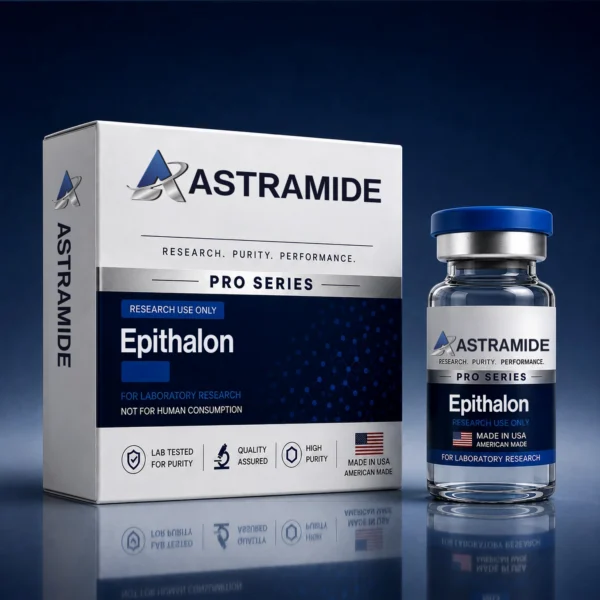
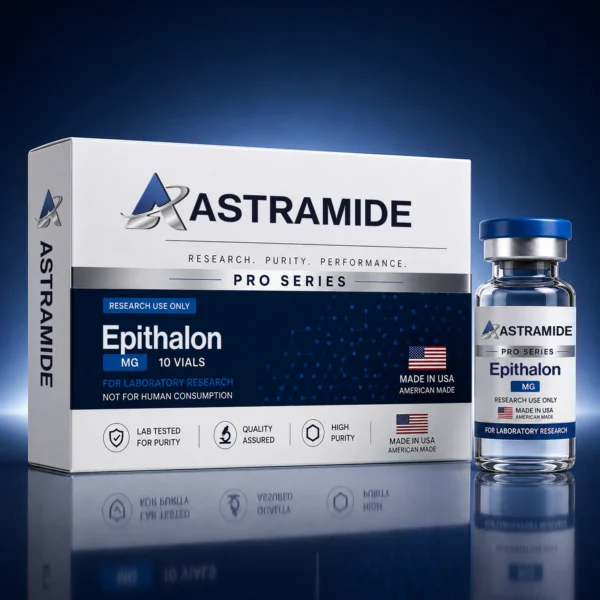
Epithalon – Pro
Pro Series
Epithalon (Epitalon), the synthetic pineal tetrapeptide Ala-Glu-Asp-Gly (AEDG)
CAS 307297-39-8C₁₄H₂₂N₄O₉390.35 g/molLinear peptideLyophilized powder
Price range: $44.99 through $400.00
Why the Pro Series costs more
- Synthesized in the USA. Domestic ground and air only, no ocean freight.
- Released only above 99% HPLC purity.
- Its own lot and its own published certificate.
Ships from Austin, TexasUnited States only
Tested by an outside labNever in-house
Every lot publishedIncluding rejected lots
Same-day dispatchOn orders before 2pm ET
BATCH
VERIFICATION
VERIFICATION
LOT NUMBER
NHS-EPI-20260809-08
10 mg vial
IDENTITY
Match (C14H22N4O9, 390.3 g/mol)
CHROMATOGRAPHIC PURITY
99%
NET CONTENT
10.19 mg (101.9% of 10 mg nominal)
Quick reference
How to read this report
Same six keys on every Astramide product page. Only the values change.
1Lot numberMatch it to the number printed on your vial. If they differ, this report is not for your vial.
2IdentityMass spectrometry confirms the molecule is the one on the label. It conforms or it does not. There is no partial result.
3Chromatographic purityThe share of the material that is the target peptide. A purity figure quoted without a method is not a purity figure.
4Net contentHow much peptide is in the vial, as measured by the laboratory. A different question from purity.
5EndotoxinMeasured against a ceiling, not a floor. Sensitivity differs by laboratory, so results are not compared across labs.
6Laboratory, method, dateWho ran it, on what instrument, and when. A report with no named laboratory or no date is not a report.
Molecular profile
Epithalon - Pro, in structural terms.

- Sequence
- Ala-Glu-Asp-Gly (AEDG)
- Molecular formula
- C₁₄H₂₂N₄O₉
- Molecular weight
- 390.35 g/mol
- CAS number
- 307297-39-8
- Structure type
- Linear peptide
- Primary molecular target
- No single receptor has been identified. Published work has examined effects on telomerase reverse transcriptase (TERT) expression and activity. It has also proposed that the peptide interacts directly with DNA promoter sequences and with linker histones H1/3 and H1/6 (Khavinson, Bondarev et al., 2003; Khavinson et al., 2021).
- Physical form
- Lyophilized powder
- PubChem CID
- 219042
Epithalon is a linear tetrapeptide, Ala-Glu-Asp-Gly, with free N- and C-termini. Two of its four residues, glutamate and aspartate, carry acidic side chains, giving the molecule a net negative charge at neutral pH. Its sequence was designed from the amino-acid composition of epithalamin, a polypeptide extract of bovine pineal gland (Araj et al., 2025).
Research profile
Where Epithalon - Pro appears in the literature.
Molecular Biology; Cell Biology; Telomere Biology; Chronobiology; Peptide Biochemistry
Research applications
- Published experimental use of the AEDG tetrapeptide includes:
- Telomerase activity and telomere length measurement in cell culture
- Cellular senescence and replicative lifespan studies in fibroblast models
- Gene expression profiling in cultured cells and tissue explants
- Peptide–DNA interaction studies by spectroscopic and computational methods
- Chronobiological studies in pineal tissue preparations
- These areas describe experimental research contexts and do not establish therapeutic efficacy or safety in humans.
Experimental systems
- Experimental systems reported in the AEDG literature include:
- Human diploid fibroblast cultures
- Pineal gland tissue explants
- Rodent models used in published preclinical work
- Cell-free peptide–DNA binding systems
- Molecular docking and computational binding models
Specific assays
- Assay formats reported in this literature include:
- Telomeric repeat amplification protocol (TRAP) for telomerase activity
- Quantitative PCR for relative telomere length
- Senescence-associated β-galactosidase staining
- RT-PCR and immunocytochemistry for gene and protein expression
- Circular dichroism and UV melting for peptide–DNA interaction
- Population doubling counts for replicative capacity
Measured endpoints
- Endpoints reported in published AEDG research include:
- Telomerase enzymatic activity relative to control
- Relative telomere length by qPCR
- Proportion of senescence-associated β-galactosidase positive cells
- Cumulative population doublings in culture
- Transcript and protein levels for genes under study
- Binding constants for peptide–DNA association
- Research use only. Not for human or animal consumption.
Mechanism and research context
What has been studied, and in what systems.
Epithalon, also spelled Epitalon, is a synthetic tetrapeptide, Ala-Glu-Asp-Gly, whose sequence was derived from the composition of epithalamin, a pineal gland extract. A 2025 review summarised the published work on it, most of which comes from cell culture, animal models and computational studies (Araj et al., 2025).
The most cited line of work concerns telomerase. In telomerase-negative human fetal fibroblasts, adding Epithalon was reported to induce expression of the telomerase catalytic subunit, telomerase activity and telomere elongation (Khavinson, Bondarev et al., 2003). A 2025 study measured telomere length by qPCR and immunofluorescence in normal epithelial cells, fibroblasts and two breast cancer lines. Normal cells showed hTERT upregulation and telomerase activity. The cancer lines showed telomere extension through the alternative lengthening of telomeres (ALT) pathway (Al-dulaimi et al., 2025).
A second line of work concerns chromatin and gene expression. In cultured lymphocytes from donors aged 76 to 80, Epithalon was reported to decondense pericentromeric heterochromatin and activate ribosomal genes (Khavinson, Lezhava et al., 2003). A systematic review of short-peptide gene regulation describes proposed AEDG binding to DNA sequences and to histones H1/3 and H1/6 (Khavinson et al., 2021).
Much of this literature comes from a small number of research groups, and independent replication is limited. Each Pro Series lot is released with its own certificate, published on this page.
These are published research systems. They do not describe approved clinical applications, and they do not establish efficacy or safety in humans.
Cited literature
Khavinson VKh et al., 2003. Epithalon peptide induces telomerase activity and telomere elongation in human somatic cells. Bull Exp Biol Med. PMID 12937682. https://pubmed.ncbi.nlm.nih.gov/12937682/
Khavinson VKh et al., 2003. Peptide Epitalon activates chromatin at the old age. Neuro Endocrinol Lett. PMID 14647006. https://pubmed.ncbi.nlm.nih.gov/14647006/
Khavinson VKh et al., 2021. Peptide regulation of gene expression: a systematic review. Molecules. PMID 34834147. https://pubmed.ncbi.nlm.nih.gov/34834147/
Al-dulaimi S et al., 2025. Epitalon increases telomere length in human cell lines through telomerase upregulation or ALT activity. Biogerontology. https://doi.org/10.1007/s10522-025-10315-x
Araj SK et al., 2025. Overview of Epitalon, a highly bioactive pineal tetrapeptide. Int J Mol Sci. PMID 40141333. https://pubmed.ncbi.nlm.nih.gov/40141333/
Evidence level
Limited. Published research consists largely of in vitro cell culture work, preclinical animal studies and computational modelling. Much of it comes from a small number of research groups, and independent replication is limited (Araj et al., 2025). Statements on this page describe reported experimental observations only and make no claim about outcomes in humans.
Handling and storage
As supplied
Lyophilized powder in a sealed vial. Held in laboratory-rated freezers from arrival to shipment.
Storage
Store per the conditions printed on the vial label. Avoid heat, moisture and repeated temperature cycling.
Handling
For qualified professionals in controlled laboratory environments, following validated laboratory procedures.
Frequently asked questions
About this compound and its batch data.
What is Epithalon?
Epithalon, also written Epitalon, is the synthetic tetrapeptide Ala-Glu-Asp-Gly (AEDG), CAS 307297-39-8, molecular formula C14H22N4O9, molecular weight 390.3 g/mol. Its sequence was designed from the composition of epithalamin, a bovine pineal gland extract. Astramide supplies it as a white to off-white lyophilized powder in a sealed vial. Sold for research use only.
What has Epithalon been examined for in published research?
Published work has focused on telomerase and chromatin in cultured cells. Khavinson and colleagues (2003, PMID 12937682) reported telomerase induction and telomere elongation in human fetal fibroblasts, and a 2025 study examined telomere length in normal and cancer cell lines. Most studies are in vitro, animal or computational, from a small number of groups. Astramide makes no claim about outcomes in humans.
What purity does the current Epithalon Pro lot reach?
Lot NHS-EPI-20260809-08 measured 99% chromatographic purity by HPLC, and identity was reported as a match to Epithalon. Testing was performed by pH Solutions Lab Inc., an ISO/IEC 17025:2017-accredited laboratory in Monrovia, California, under certificate 260817-899-NHS-3, reported 29 September 2026. The full certificate is published on this page, and every figure here is taken from it.
How much Epithalon is in the vial?
The label claim is 10 mg per vial. For lot NHS-EPI-20260809-08, the laboratory measured a net content of 10.19 mg per vial, reported as 101.9% of the nominal amount. Astramide publishes the measured figure exactly as the certificate reports it. Net content is a separate measurement from chromatographic purity.
How is Astramide's Epithalon Pro tested?
Lot NHS-EPI-20260809-08 was tested by pH Solutions Lab Inc. in Monrovia, California. The certificate reports identity, HPLC purity, net content, appearance, water content, pH, water activity, a 10-organism microbial panel, four heavy metals, 12 residual solvents, sterility and mycotoxins. Every panel with a stated outcome is reported as pass. Bacterial endotoxin (LAL) was not reported on this certificate.
How should Epithalon be stored for research use?
Lyophilized Epithalon is stored at -20°C, sealed and protected from light. Once reconstituted, solutions are held at 2 to 8°C and used within 14 to 30 days. Repeated freeze-thaw cycles should be avoided. Storage conditions printed on the vial label take precedence.
Is Epithalon the same as Epithalamin?
No. Epithalamin is a polypeptide extract of bovine pineal gland. Epithalon is a single synthetic tetrapeptide, Ala-Glu-Asp-Gly, whose sequence was designed from that extract’s amino-acid composition (Araj et al., 2025, PMID 40141333). The two are studied as separate materials.
What is the difference between research-grade and pharmaceutical-grade Epithalon?
They are distinct classifications. Research-grade material is supplied for laboratory research use only and is characterised by the analytical panel published on this page. Pharmaceutical-grade is a separate regulatory classification governing material intended for human use. Astramide supplies research-grade material and makes no pharmaceutical-grade claim.
What is the difference between Epithalon and Epithalon Pro?
Epithalon Pro is part of the Astramide Pro Series. It is American-made, synthesized in the USA, and moves by domestic ground and air only, with no ocean freight. It is released under its own lot, and only when HPLC purity measures at or above 99%. The full certificate for each lot is published on this page. The standard Epithalon is released under separate lots with separate certificates.
Research use only
This product is intended strictly for in-vitro laboratory research conducted by qualified professionals. It is not intended for human or animal consumption, clinical use, or therapeutic application. The statements on this page have not been reviewed by the FDA. These research peptides are not intended to diagnose, treat, cure, or prevent any disease. Research Use Only.
COA library
Every lot we have tested
Search by batch number. Past lots stay published.
How we test
The analytical panel
What each method measures and the criterion each lot must meet.
Open Lab
Send us your peptides
Any vendor. Same lab. Your own Certificate of Analysis.
Ships from Austin, TexasUSPS or UPS, your choice
United States onlyFree shipping at $150 and over
Optional shipping insuranceAdded at checkout
Replacement or store creditOn approved claims. See refund policy.
Related products
-
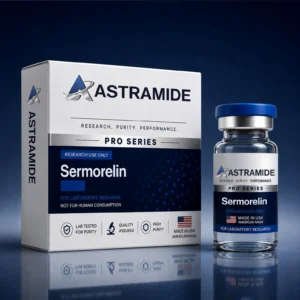 Pro Series
Sermorelin – Pro
Price range: $74.99 through $700.00Select options This product has multiple variants. The options may be chosen on the product page -
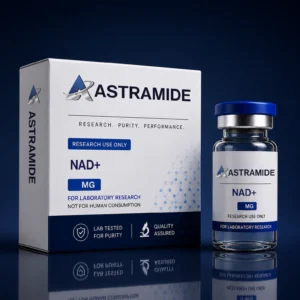
NAD+
Price range: $79.00 through $1,159.00Select options This product has multiple variants. The options may be chosen on the product page -
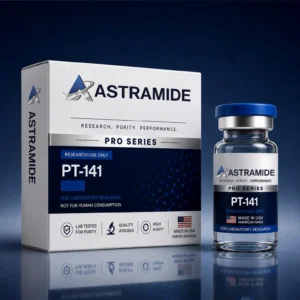 Pro Series
PT-141 – Pro
Price range: $50.00 through $450.00Select options This product has multiple variants. The options may be chosen on the product page -
 Pro Series
TB-500 – Pro
Price range: $60.00 through $850.00Select options This product has multiple variants. The options may be chosen on the product page