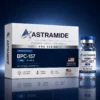
| Pcs. | Single Vial, Pack of Ten |
|---|---|
| Strength | 10mg |
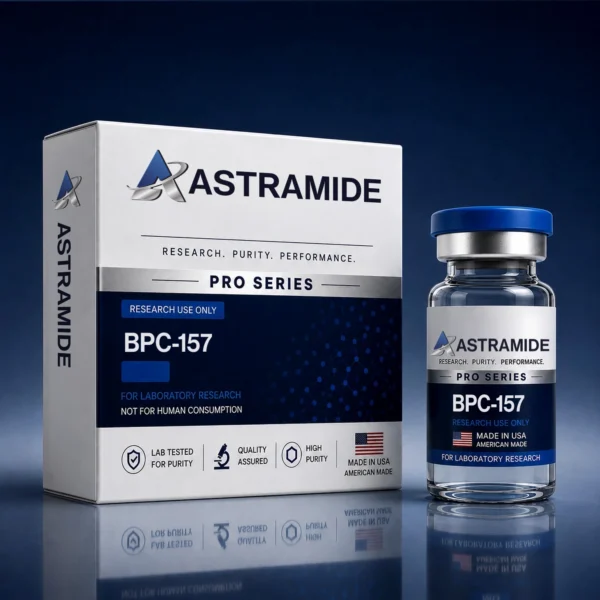
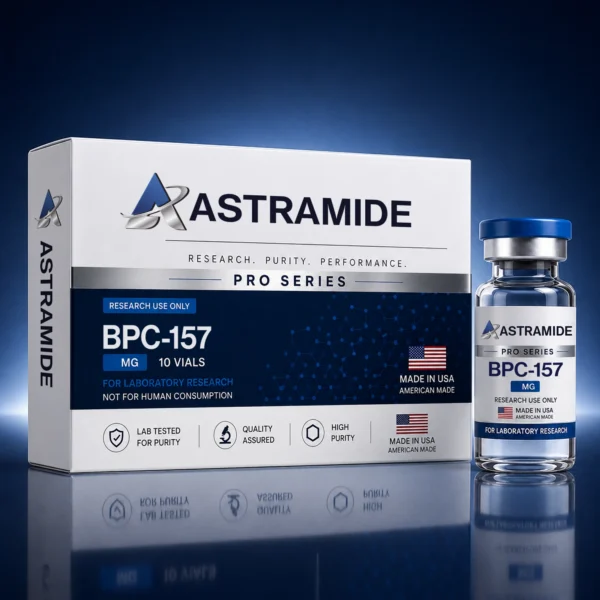
BPC-157 Pro
Pro Series
BPC-157, a synthetic pentadecapeptide from the gastric body protection compound sequence
CAS 137525-51-0C₆₂H₉₈N₁₆O₂₂1419.5 g/mol15 amino acidsLinear peptideLyophilized powder
Price range: $65.00 through $630.00
Why the Pro Series costs more
- Synthesized in the USA. Domestic ground and air only, no ocean freight.
- Released only above 99% HPLC purity.
- Its own lot and its own published certificate.
Ships from Austin, TexasUnited States only
Tested by an outside labNever in-house
Every lot publishedIncluding rejected lots
Same-day dispatchOn orders before 2pm ET
BATCH
VERIFICATION
VERIFICATION
LOT NUMBER
NHS-BPC10-20260914-01
10 mg vial
IDENTITY
Match (C62H98N16O22, 1419.5 g/mol)
CHROMATOGRAPHIC PURITY
99%
NET CONTENT
9.9966 mg (99.966% of 10 mg label claim)
Quick reference
How to read this report
Same six keys on every Astramide product page. Only the values change.
1Lot numberMatch it to the number printed on your vial. If they differ, this report is not for your vial.
2IdentityMass spectrometry confirms the molecule is the one on the label. It conforms or it does not. There is no partial result.
3Chromatographic purityThe share of the material that is the target peptide. A purity figure quoted without a method is not a purity figure.
4Net contentHow much peptide is in the vial, as measured by the laboratory. A different question from purity.
5EndotoxinMeasured against a ceiling, not a floor. Sensitivity differs by laboratory, so results are not compared across labs.
6Laboratory, method, dateWho ran it, on what instrument, and when. A report with no named laboratory or no date is not a report.
Molecular profile
BPC-157 Pro, in structural terms.
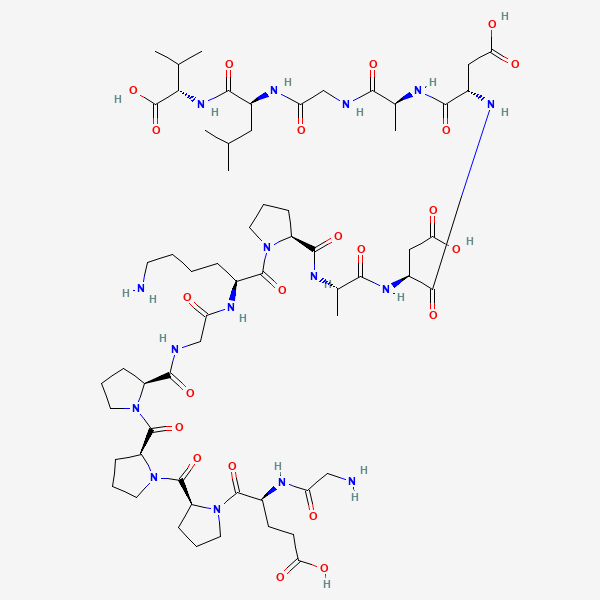
- Sequence
- Gly-Glu-Pro-Pro-Pro-Gly-Lys-Pro-Ala-Asp-Asp-Ala-Gly-Leu-Val One-letter sequence: GEPPPGKPADDAGLV
- Molecular formula
- C₆₂H₉₈N₁₆O₂₂
- Molecular weight
- 1419.5 g/mol
- CAS number
- 137525-51-0
- Peptide length
- 15 amino acids
- Structure type
- Linear peptide
- Parent sequence
- Body protection compound (BPC), human gastric juice protein
- Primary molecular target
- No single receptor has been established for BPC-157. Published preclinical work has examined Src, Caveolin-1 and eNOS signalling in vascular endothelial cells (Hsieh et al., 2020) and growth hormone receptor expression in tendon fibroblasts (Chang et al., 2014).
- Physical form
- Lyophilized powder
- PubChem CID
- 9941957
BPC-157 is a synthetic linear peptide of 15 amino acids, GEPPPGKPADDAGLV, corresponding to a partial sequence of body protection compound (BPC), a protein described in human gastric juice. It contains no disulfide bonds or non-standard residues. The N-terminal half is proline-rich (Pro3 to Pro5 and Pro8), and the sequence carries two adjacent aspartate residues (Asp10 and Asp11).
Research profile
Where BPC-157 Pro appears in the literature.
Peptide Biology; Vascular Biology; Cell Biology; Gastrointestinal Physiology; Signal Transduction
Research applications
- Published studies have used BPC-157 in the following laboratory work:
- Nitric oxide generation in vascular endothelial cells
- Vasomotor tone in isolated aortic rings
- Src, Caveolin-1 and eNOS phosphorylation
- Endothelial cell migration
- Growth hormone receptor expression in tendon fibroblasts
- NO-system interaction in rodent gastric mucosa models
Experimental systems
- Isolated rat thoracic aorta
- Cultured vascular endothelial cells
- Rat Achilles tendon fibroblasts
- Rodent gastric mucosa models
Specific assays
- Organ-bath isometric tension recording
- Intracellular nitric oxide fluorescent probe labelling
- Western blot for phosphorylated Src, Caveolin-1, eNOS and JAK2
- RT and real-time PCR
- MTT proliferation assay
- Endothelial cell migration assay
Measured endpoints
- Vessel tension relative to L-NAME and hemoglobin controls
- Intracellular nitric oxide signal
- Phosphorylation state of Src, Caveolin-1 and eNOS
- Endothelial cell migration
- Growth hormone receptor mRNA and protein expression
- JAK2 activation
Mechanism and research context
What has been studied, and in what systems.
BPC-157 has been studied almost entirely in preclinical systems. A large part of the literature concerns its relationship with the nitric oxide system, reviewed by Sikiric et al. (2014).
In isolated rat aorta, Hsieh et al. (2020) reported concentration-dependent vasorelaxation that was blocked by L-NAME. They also reported phosphorylation of Src, Caveolin-1 and eNOS in endothelial cells, which a Src inhibitor abolished.
A second line of work used rat tendon fibroblasts. Chang et al. (2014) reported increased growth hormone receptor expression and JAK2 activation.
These studies describe cell, tissue and animal systems. They do not describe effects in people.
These are published research systems. They do not describe approved clinical applications, and they do not establish efficacy or safety in humans.
Cited literature
Hsieh MJ et al., 2020. Modulatory effects of BPC 157 on vasomotor tone and the activation of Src-Caveolin-1-endothelial nitric oxide synthase pathway. Sci Rep. PMID 33051481. https://pubmed.ncbi.nlm.nih.gov/33051481/
Chang CH et al., 2014. Pentadecapeptide BPC 157 enhances the growth hormone receptor expression in tendon fibroblasts. Molecules. PMID 25415472. https://pubmed.ncbi.nlm.nih.gov/25415472/
Sikiric P et al., 2014. Stable gastric pentadecapeptide BPC 157-NO-system relation. Curr Pharm Des. PMID 23755725. https://pubmed.ncbi.nlm.nih.gov/23755725/
Evidence level
Preclinical. The published work on BPC-157 consists of in vitro, ex vivo and animal studies, and most of it comes from a small number of research groups. Statements on this page describe experimental systems only. They do not establish efficacy or safety in humans.
Handling and storage
As supplied
Lyophilized powder in a sealed vial. Held in laboratory-rated freezers from arrival to shipment.
Storage
Store per the conditions printed on the vial label. Avoid heat, moisture and repeated temperature cycling.
Handling
For qualified professionals in controlled laboratory environments, following validated laboratory procedures.
Frequently asked questions
About this compound and its batch data.
What is BPC-157?
BPC-157 is a synthetic linear peptide of 15 amino acids, Gly-Glu-Pro-Pro-Pro-Gly-Lys-Pro-Ala-Asp-Asp-Ala-Gly-Leu-Val (GEPPPGKPADDAGLV). Its sequence is a partial sequence of body protection compound, a protein first described in human gastric juice. The molecular formula is C62H98N16O22 and the molecular weight is approximately 1419.5 g/mol. It is supplied as a lyophilized powder. Sold for research use only.
What has BPC-157 been examined for in published research?
Published research on BPC-157 is preclinical. A large share concerns the nitric oxide system. Hsieh et al. (2020, Sci Rep, PMID 33051481) studied isolated rat aorta and cultured vascular endothelial cells and reported nitric oxide generation with phosphorylation of Src, Caveolin-1 and eNOS. Other work has examined growth hormone receptor expression in rat tendon fibroblasts (Chang et al., 2014, PMID 25415472). Astramide makes no claim about outcomes in humans.
What purity does the current BPC-157 Pro lot reach?
The current BPC-157 Pro lot is NHS-BPC10-20260914-01. HPLC analysis by pH Solutions measured chromatographic purity of 99%, and identity was reported as a match. The results are on certificate 260922-NHS-1, reported September 29, 2026. The full certificate for this lot is published on this page and in the Astramide certificate library, where it can be looked up by the lot number printed on the vial.
How much BPC-157 is in the vial?
Each vial carries a label claim of 10 mg of BPC-157. For the current lot, NHS-BPC10-20260914-01, pH Solutions measured a net content of 9.9966 mg per vial, which is 99.966% of the label claim. The figure is published exactly as the laboratory reported it. The full certificate for the lot is published on this page.
How should BPC-157 be stored for research use?
Store the lyophilized powder at -20°C, sealed and away from light. Avoid repeated temperature cycling and moisture. Once reconstituted for laboratory work, hold the solution at 2 to 8°C and use it within 14 to 30 days. Astramide keeps every lot in laboratory-rated freezers from arrival until dispatch. Handle only in a controlled laboratory setting.
Is BPC-157 Pro the same as the BPC-157 in Astramide's blends?
The peptide is the same 15-amino-acid sequence, but the products are different. BPC-157 Pro is a single-compound vial with its own lot and certificate. The BPC-157 + TB-500 blend, GLOW and KLOW combine BPC-157 with other peptides in one vial. Each blend is released under its own lot with its own certificate, and a certificate for one product never applies to another.
How is Astramide's BPC-157 Pro tested?
Lot NHS-BPC10-20260914-01 was tested by pH Solutions Lab, an independent ISO/IEC 17025:2017 accredited laboratory (A2LA R243, PJLA Testing #84351). The certificate reports identity, chromatographic purity by HPLC, net content, water content, pH, water activity, a 10-organism microbial panel, heavy metals, residual solvents, sterility and mycotoxins. Endotoxin is not reported on this certificate. Results apply only to this lot.
What is the difference between BPC-157 and BPC-157 Pro?
BPC-157 Pro is part of the Astramide Pro Series. It is American-made, synthesized in the USA, and moves by domestic ground and air only, with no ocean freight. It is released under its own lot, and only when HPLC purity measures at or above 99%. The full certificate for each lot is published on this page. Astramide’s BPC-157 blends are released under separate lots with separate certificates.
Research use only
This product is intended strictly for in-vitro laboratory research conducted by qualified professionals. It is not intended for human or animal consumption, clinical use, or therapeutic application. The statements on this page have not been reviewed by the FDA. These research peptides are not intended to diagnose, treat, cure, or prevent any disease. Research Use Only.
COA library
Every lot we have tested
Search by batch number. Past lots stay published.
How we test
The analytical panel
What each method measures and the criterion each lot must meet.
Open Lab
Send us your peptides
Any vendor. Same lab. Your own Certificate of Analysis.
Ships from Austin, TexasUSPS or UPS, your choice
United States onlyFree shipping at $150 and over
Optional shipping insuranceAdded at checkout
Replacement or store creditOn approved claims. See refund policy.
Related products
-
 Pro Series
Sermorelin – Pro
Price range: $74.99 through $700.00Select options This product has multiple variants. The options may be chosen on the product page -
 Pro Series
Glutathione – Pro
Price range: $74.99 through $700.00Select options This product has multiple variants. The options may be chosen on the product page -
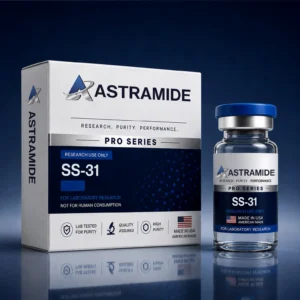 Pro Series
SS-31 – Pro
Price range: $60.00 through $550.00Select options This product has multiple variants. The options may be chosen on the product page -
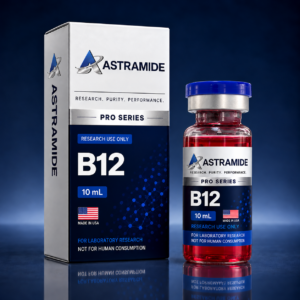 Pro Series
B-12 (Cyanocobalamin) Pro
$44.99