

| Pcs | Single Vial, Pack of 10 |
|---|---|
| Strength | 1500mg |
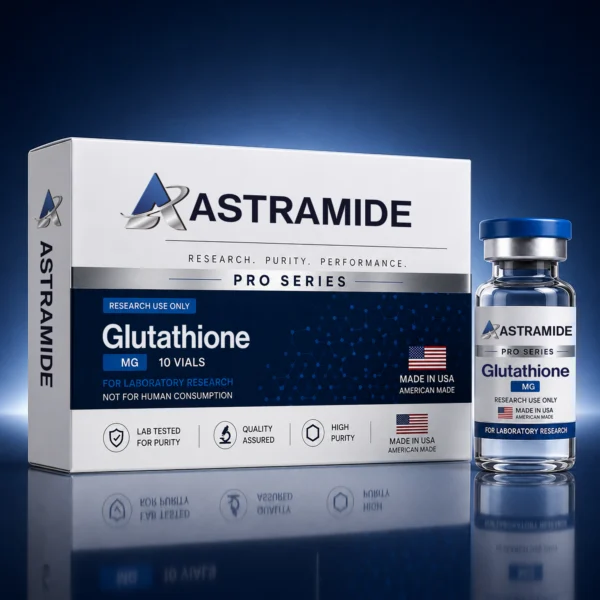
Glutathione – Pro
Pro Series
Glutathione, the gamma-linked thiol tripeptide gamma-Glu-Cys-Gly (reduced form, GSH)
CAS 70-18-8C₁₀H₁₇N₃O₆S307.32 g/mol3 amino acidsLinear peptideLyophilized powder
Price range: $74.99 through $700.00
Why the Pro Series costs more
- Synthesized in the USA. Domestic ground and air only, no ocean freight.
- Released only above 99% HPLC purity.
- Its own lot and its own published certificate.
Ships from Austin, TexasUnited States only
Tested by an outside labNever in-house
Every lot publishedIncluding rejected lots
Same-day dispatchOn orders before 2pm ET
BATCH
VERIFICATION
VERIFICATION
LOT NUMBER
NHS-GLU1000-20260903-01
1000 mg vial
IDENTITY
Match (C10H17N3O6S, 307.3 g/mol)
CHROMATOGRAPHIC PURITY
99%
NET CONTENT
1,001.94 mg (1,000 mg nominal test sample)
Quick reference
How to read this report
Same six keys on every Astramide product page. Only the values change.
1Lot numberMatch it to the number printed on your vial. If they differ, this report is not for your vial.
2IdentityMass spectrometry confirms the molecule is the one on the label. It conforms or it does not. There is no partial result.
3Chromatographic purityThe share of the material that is the target peptide. A purity figure quoted without a method is not a purity figure.
4Net contentHow much peptide is in the vial, as measured by the laboratory. A different question from purity.
5EndotoxinMeasured against a ceiling, not a floor. Sensitivity differs by laboratory, so results are not compared across labs.
6Laboratory, method, dateWho ran it, on what instrument, and when. A report with no named laboratory or no date is not a report.
Molecular profile
Glutathione - Pro, in structural terms.
- Sequence
- γ-Glu-Cys-Gly (γ-ECG)
- Molecular formula
- C₁₀H₁₇N₃O₆S
- Molecular weight
- 307.32 g/mol
- CAS number
- 70-18-8
- Peptide length
- 3 amino acids
- Structure type
- Linear peptide
- Primary molecular target
- Glutathione is an enzyme substrate rather than a receptor ligand. It is the reducing substrate of the glutathione peroxidases and the conjugating substrate of the glutathione S-transferases, and its oxidised form, GSSG, is reduced back to GSH by glutathione reductase using NADPH (Brigelius-Flohé and Maiorino, 2013; Hayes et al., 2005).
- Physical form
- Lyophilized powder
- PubChem CID
- 124886
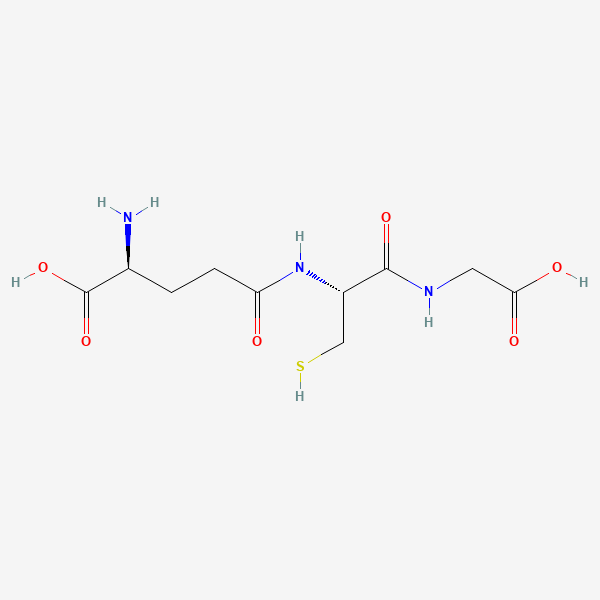
Glutathione is a tripeptide of L-glutamate, L-cysteine and glycine in which glutamate is joined to cysteine through its side-chain gamma-carboxyl group rather than the alpha-carboxyl group used in standard peptide bonds. The free sulfhydryl group on cysteine is the reactive centre in thiol-disulfide exchange, and two GSH molecules oxidise to the disulfide GSSG (Forman et al., 2009). The material supplied is the reduced form, CAS 70-18-8.
Research profile
Where Glutathione - Pro appears in the literature.
Redox Biochemistry; Enzymology; Cell Biology; Analytical Chemistry; Xenobiotic Metabolism
Research applications
- Glutathione has been used in laboratory work as an enzyme substrate, reference standard and redox buffer component, including:
- Substrate in glutathione peroxidase activity assays
- Substrate in glutathione S-transferase conjugation assays
- Calibration standard for GSH and GSSG quantification
- GSH/GSSG redox buffers in cell-free systems
- Reference material for HPLC and LC-MS thiol methods
- Studies of glutathione synthesis and its regulation in cultured cells
- Studies of mitochondrial and peroxisomal glutathione pools
Experimental systems
- Purified enzymes (glutathione peroxidase, glutathione S-transferase, glutathione reductase)
- Cultured mammalian cell lines
- Isolated mitochondria and peroxisome preparations
- Rodent tissue homogenates
- Cell-free redox buffer systems
Specific assays
- DTNB (Ellman's reagent) enzymatic recycling assay for total GSH and GSSG
- NADPH-coupled glutathione reductase assay
- Coupled glutathione peroxidase activity assay
- CDNB conjugation assay for glutathione S-transferase activity
- Reversed-phase HPLC with UV or fluorescence detection
- LC-MS identity and quantification
- Genetically encoded redox sensor imaging (roGFP2)
Measured endpoints
- Reduced glutathione (GSH) concentration
- Glutathione disulfide (GSSG) concentration and GSH/GSSG ratio
- Enzyme activity rates (GPx, GST, glutathione reductase)
- NADPH consumption rate
- Glutathione conjugate formation
- Compartmental redox state (sensor oxidation ratio)
Mechanism and research context
What has been studied, and in what systems.
Glutathione (GSH) is the most abundant low-molecular-weight thiol synthesised in mammalian cells and one of the most extensively characterised molecules in redox biochemistry (Forman et al., 2009). It is made in two ATP-dependent steps: glutamate cysteine ligase joins glutamate and cysteine, and glutathione synthetase adds glycine (Lu, 2013).
Much of the published work concerns glutathione as an enzyme substrate. Glutathione peroxidases use GSH to reduce hydrogen peroxide and organic hydroperoxides, producing GSSG (Brigelius-Flohé and Maiorino, 2013). Glutathione S-transferases conjugate GSH to electrophilic compounds across three mammalian enzyme families (Hayes et al., 2005). The reaction mechanisms of glutathione-dependent enzymes have been reviewed in detail (Deponte, 2013).
Measurement is a research topic in its own right. The GSH/GSSG ratio is widely used as a laboratory readout of redox state, and the DTNB enzymatic recycling method is a standard protocol for quantifying both forms in cell and tissue extracts (Rahman et al., 2006). More recent studies have examined glutathione pools inside organelles, including peroxisomes (Ferreira et al., 2023).
Because reduced glutathione oxidises to GSSG in solution, the purity and identity of the starting material affect any redox measurement. Each Pro Series lot is released with its own certificate, published on this page.
These are published research systems. They do not describe approved clinical applications, and they do not establish efficacy or safety in humans.
Cited literature
Forman HJ et al., 2009. Glutathione: overview of its protective roles, measurement, and biosynthesis. Mol Aspects Med. PMID 18796312. https://pubmed.ncbi.nlm.nih.gov/18796312/
Lu SC, 2013. Glutathione synthesis. Biochim Biophys Acta. PMID 22995213. https://pubmed.ncbi.nlm.nih.gov/22995213/
Brigelius-Flohé R et al., 2013. Glutathione peroxidases. Biochim Biophys Acta. PMID 23201771. https://pubmed.ncbi.nlm.nih.gov/23201771/
Hayes JD et al., 2005. Glutathione transferases. Annu Rev Pharmacol Toxicol. PMID 15822171. https://pubmed.ncbi.nlm.nih.gov/15822171/
Deponte M, 2013. Glutathione catalysis and the reaction mechanisms of glutathione-dependent enzymes. Biochim Biophys Acta. PMID 23036594. https://pubmed.ncbi.nlm.nih.gov/23036594/
Rahman I et al., 2006. Assay for quantitative determination of glutathione and glutathione disulfide levels using enzymatic recycling method. Nat Protoc. PMID 17406579. https://pubmed.ncbi.nlm.nih.gov/17406579/
Ferreira MJ et al., 2023. Glutathione and peroxisome redox homeostasis. Redox Biol. PMID 37804696. https://pubmed.ncbi.nlm.nih.gov/37804696/
Evidence level
Extensive. Glutathione is an endogenous tripeptide with a large biochemical, cell-based and animal-model literature, and its enzymology is well characterised (Deponte, 2013). Statements on this page describe experimental systems and enzyme chemistry, not outcomes in humans, and do not imply approval or efficacy for the research material supplied here.
Handling and storage
As supplied
Lyophilized powder in a sealed vial. Held in laboratory-rated freezers from arrival to shipment.
Storage
Store per the conditions printed on the vial label. Avoid heat, moisture and repeated temperature cycling.
Handling
For qualified professionals in controlled laboratory environments, following validated laboratory procedures.
Frequently asked questions
About this compound and its batch data.
What is glutathione?
Glutathione (GSH) is the tripeptide gamma-glutamyl-cysteinyl-glycine, CAS 70-18-8, molecular formula C10H17N3O6S, molecular weight 307.3 g/mol. Its glutamate is joined to cysteine through the side-chain gamma-carboxyl group, and the cysteine thiol is its reactive group. Astramide supplies the reduced form as a white to off-white lyophilized powder in a sealed vial. Sold for research use only.
What has glutathione been examined for in published research?
Published work has examined glutathione mainly as an enzyme substrate. Brigelius-Flohé and Maiorino (2013, PMID 23201771) reviewed the mammalian glutathione peroxidases, which use GSH to reduce hydrogen peroxide and organic hydroperoxides. Related work covers glutathione S-transferase conjugation and GSH/GSSG measurement in cell and tissue extracts. These are pre-clinical biochemical and cell-based studies. Astramide makes no claim about outcomes in humans.
What purity does the current Glutathione Pro lot reach?
Lot NHS-GLU1000-20260903-01 measured 99% chromatographic purity by HPLC with UV detection, and identity was reported as a match to glutathione. Testing was performed by pH Solutions Lab Inc., an ISO/IEC 17025:2017-accredited laboratory in Monrovia, California, under certificate 260914-899-NHS-6, reported 29 September 2026. The full certificate is published on this page, and every figure here is taken from it.
How much glutathione is in the vial?
The label claim is 1,500 mg per vial. The certificate for lot NHS-GLU1000-20260903-01 covers a 1,000 mg nominal test sample from this lot, which the laboratory measured at 1,001.94 mg, reported as 100.194% of nominal. Astramide publishes the measured figure exactly as the certificate reports it. Net content is a separate measurement from chromatographic purity.
How should glutathione be stored for research use?
Lyophilized glutathione is stored at -20°C, sealed and protected from light. Once reconstituted, solutions are held at 2 to 8°C and used within 14 to 30 days. Reduced glutathione oxidises to the disulfide GSSG in solution, so freshly prepared stocks are generally preferred for redox measurements. Storage conditions printed on the vial label take precedence.
What is the difference between reduced glutathione (GSH) and oxidized glutathione (GSSG)?
GSH is the reduced monomer with a free cysteine thiol. GSSG is the disulfide formed when two GSH molecules are oxidised, for example in the glutathione peroxidase reaction. Glutathione reductase converts GSSG back to GSH using NADPH, and the GSH to GSSG ratio is a common laboratory readout of redox state (Rahman et al., 2006, PMID 17406579). This product is the reduced form, CAS 70-18-8.
How is Astramide's Glutathione Pro tested?
Lot NHS-GLU1000-20260903-01 was tested by pH Solutions Lab Inc. in Monrovia, California. The certificate reports identity, HPLC purity, net content, appearance, water content, pH, water activity, a 10-organism microbial panel, four heavy metals, 12 residual solvents, sterility and mycotoxins. Every panel with a stated outcome is reported as pass. Bacterial endotoxin (LAL) was not reported on this certificate.
What is the difference between research-grade and pharmaceutical-grade glutathione?
They are distinct classifications. Research-grade material is supplied for laboratory research use only and is characterised by the analytical panel published on this page. Pharmaceutical-grade is a separate regulatory classification governing material intended for human use. Astramide supplies research-grade material and makes no pharmaceutical-grade claim.
What is the difference between Glutathione and Glutathione Pro?
Glutathione Pro is part of the Astramide Pro Series. It is American-made, synthesized in the USA, and moves by domestic ground and air only, with no ocean freight. It is released under its own lot, and only when HPLC purity measures at or above 99%. The full certificate for each lot is published on this page. The standard Glutathione is released under separate lots with separate certificates.
Research use only
This product is intended strictly for in-vitro laboratory research conducted by qualified professionals. It is not intended for human or animal consumption, clinical use, or therapeutic application. The statements on this page have not been reviewed by the FDA. These research peptides are not intended to diagnose, treat, cure, or prevent any disease. Research Use Only.
COA library
Every lot we have tested
Search by batch number. Past lots stay published.
How we test
The analytical panel
What each method measures and the criterion each lot must meet.
Open Lab
Send us your peptides
Any vendor. Same lab. Your own Certificate of Analysis.
Ships from Austin, TexasUSPS or UPS, your choice
United States onlyFree shipping at $150 and over
Optional shipping insuranceAdded at checkout
Replacement or store creditOn approved claims. See refund policy.
Related products
-
 Pro Series
Oxytocin Acetate – Pro
Price range: $60.00 through $550.00Select options This product has multiple variants. The options may be chosen on the product page -
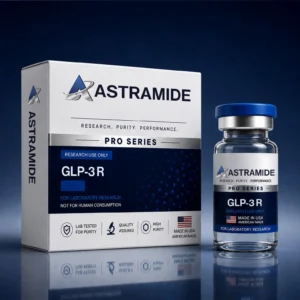 Pro Series
GLP-3R – Pro
Price range: $129.00 through $2,331.00Select options This product has multiple variants. The options may be chosen on the product page -
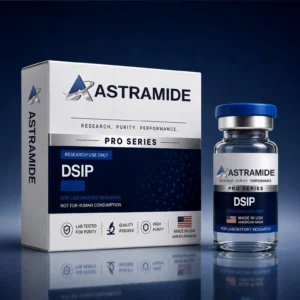 Pro Series
DSIP – Pro
Price range: $35.00 through $320.00Select options This product has multiple variants. The options may be chosen on the product page -
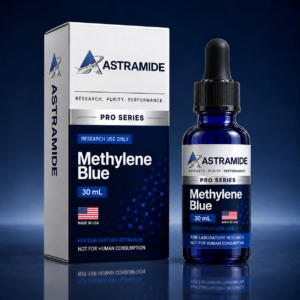 Pro Series
Methylene Blue Pro
$24.99