Lot 2026/02 · 10 mg vial · Krause Analytical · reported 8 May 2026 . The bar shows where the reported result falls against Astramide’s published release criterion. The notch marks the criterion.
Within criterionAbove criterionNot on this COA
Test
Method
Criterion
Result
Result vs criterion
Status
Identity
HPLC-UV-MS
Mass spectral match to the labelled compound
Confirmed
WITHIN SPEC
Chromatographic purity
HPLC-UV/MS
at or above 98.0%
99.1 %
95at or above 98.0%100
WITHIN SPEC
Net content
HPLC-UV-MS
9.38 mg
80120
REPORTED
Endotoxin
LAL, USP <85>
below the 0.5 EU/mL limit of quantification
<0.5 EU/mL
WITHIN SPEC
Values are reported per vial or bottle unless otherwise noted. Every figure here is taken from the batch Certificate of Analysis and nothing else.
Krause Analytical · 3 pages · served inline, not a screenshot
Quick reference
How to read this report
Same six keys on every Astramide product page. Only the values change.
1Lot numberMatch it to the number printed on your product label. If they differ, this report is not for your product.
2IdentityMass spectrometry confirms the molecule is the one on the label. It conforms or it does not. There is no partial result.
3Chromatographic purityThe share of the material that is the target peptide. A purity figure quoted without a method is not a purity figure.
4Net contentHow much compound is in each vial or bottle, as measured by the laboratory. A different question from purity.
5EndotoxinMeasured against a ceiling, not a floor. Sensitivity differs by laboratory, so results are not compared across labs.
6Laboratory, method, dateWho ran it, on what instrument, and when. A report with no named laboratory or no date is not a report.
Molecular profile
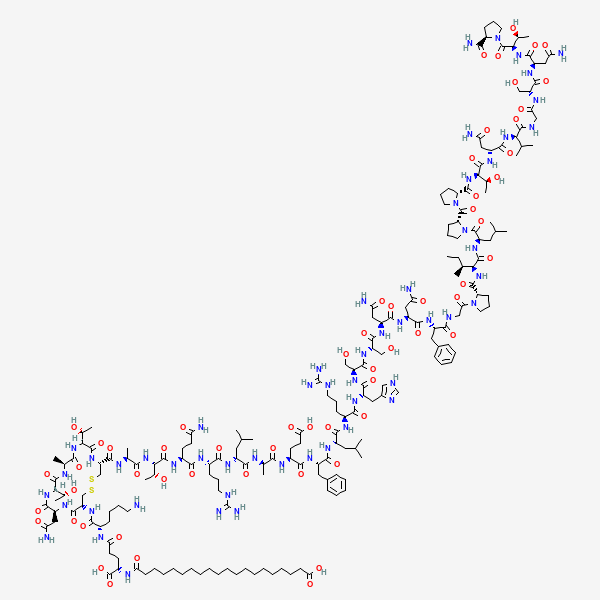
Cagrilintide, in structural terms.
Sequence
Cagrilintide is a long-acting acylated analogue built on the human amylin (islet amyloid polypeptide) scaffold. The native human amylin reference sequence is:
Lys-Cys-Asn-Thr-Ala-Thr-Cys-Ala-Thr-Gln-Arg-Leu-Ala-Asn-Phe-Leu-Val-His-Ser-Ser-Asn-Asn-Phe-Gly-Ala-Ile-Leu-Ser-Ser-Thr-Asn-Val-Gly-Ser-Asn-Thr-Tyr-NH₂
One-letter representation:
KCNTATCATQRLANFLVHSSNNFGAILSSTNVGSNTY-NH₂
The native peptide is 37 residues, C-terminally amidated, with a disulfide bridge between Cys2 and Cys7 (UniProt P10997, residues 34–70). The analogue supplied here carries substitutions and a fatty-acid side chain that extend its circulating half-life relative to native amylin. Identity for each lot is confirmed by mass spectrometry against the labelled compound; refer to the certificate of analysis published on this page.
Molecular formula
C₂₉₄H₄₆₆N₈₄O₈₈S₂
Molecular weight
6781.6 g/mol
CAS number
1415456-99-3
Structure type
Linear peptide
Primary molecular target
Amylin receptors AMY1, AMY2 and AMY3 — heterodimers of the calcitonin receptor (CTR) with receptor activity-modifying proteins RAMP1, RAMP2 and RAMP3; calcitonin receptorThe amylin receptor phenotype does not arise from a dedicated receptor gene. It is generated when RAMP subunits associate with the calcitonin receptor and alter its ligand selectivity, a mechanism established in the receptor pharmacology literature cited on this page.
Cagrilintide continues to be evaluated for its relevance in experimental biology, particularly within studies involving receptor-level interactions, hormonal signaling pathways, and biochemical pathway analysis.The peptide is manufactured by solid-phase peptide synthesis.
In preclinical and laboratory research models, Cagrilintide has been examined across metabolic, endocrine, and cellular systems. Research focus includes:
Amylin receptor signaling pathways
Calcitonin receptor interaction models
Neuroendocrine signaling mechanisms
Cellular pathway interactions
These observations are limited to controlled experimental environments and support ongoing laboratory investigations.
These are published research systems. They do not describe approved clinical applications, and they do not establish efficacy or safety in humans.
Cited literature
Cao J et al., 2022. A structural basis for amylin receptor phenotype. Science. PMID 35324283. https://pubmed.ncbi.nlm.nih.gov/35324283/
Zumpe ET et al., 2000. Multiple ramp domains are required for generation of amylin receptor phenotype from the calcitonin receptor gene product. Biochem Biophys Res Commun. PMID 10623626. https://pubmed.ncbi.nlm.nih.gov/10623626/
Hay DL et al., 2016. Receptor activity-modifying proteins; multifunctional G protein-coupled receptor accessory proteins. Biochem Soc Trans. PMID 27068971. https://pubmed.ncbi.nlm.nih.gov/27068971/
Evidence level
The receptor pharmacology of the calcitonin receptor family is well characterised in published structural and functional work. Literature specific to acylated amylin analogues is more recent and largely preclinical or analytical in nature. Statements on this page describe experimental systems only and make no claim about outcomes in humans.
Handling and storage
As supplied
Lyophilized powder in a sealed vial. Held in laboratory-rated freezers from arrival to shipment.
Storage
Store per the conditions printed on the vial label. Avoid heat, moisture and repeated temperature cycling.
Handling
For qualified professionals in controlled laboratory environments, following validated laboratory procedures.
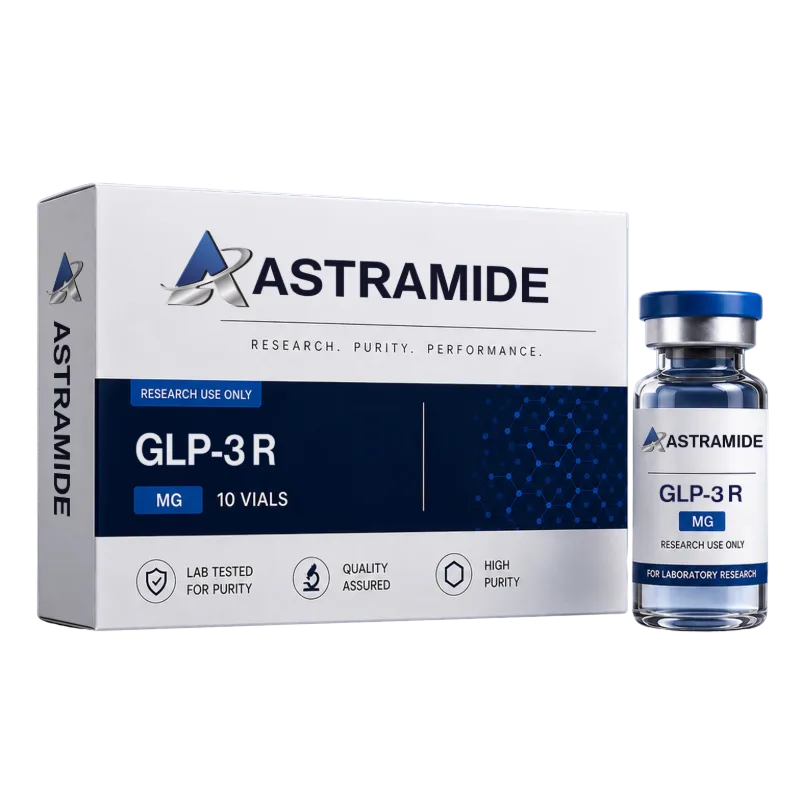
Cagrilintide is a long-acting acylated analogue built on the human amylin scaffold, a 37-residue pancreatic peptide. CAS 1415456-99-3, molecular weight 6781.6 g/mol. Astramide supplies it as a lyophilized powder for laboratory research use only. It is not intended for human or animal consumption, clinical use, or therapeutic application.
What has Cagrilintide been examined for in published research?
Published work on this compound class centres on the amylin receptors, which form when receptor activity-modifying proteins associate with the calcitonin receptor and alter its ligand selectivity (Cao et al., 2022, PMID 35324283; Zumpe et al., 2000, PMID 10623626). Research is structural and pre-clinical. Astramide makes no claim about outcomes in humans.
What purity does the current Cagrilintide lot reach?
Lot 2026/02 returned 99.1% chromatographic purity by HPLC-UV/MS, tested by Krause Analytical under Lab No. 205089 and reported 8 May 2026. Identity was confirmed by mass spectral match to the labelled compound. The full certificate is published on this page and every figure shown here is taken from it.
How much Cagrilintide is in the vial?
The label claim is 10 mg. Lot 2026/02 measured 9.38 mg of Cagrilintide, which is 93.8% of label. Astramide publishes the measured figure rather than the label figure. Net content is a separate question from purity.
How is Astramide's Cagrilintide tested?
Testing is performed by Krause Analytical, a DEA-registered, ISO/IEC 17025-certified laboratory in Austin, Texas. Lot 2026/02 was analysed by four methods: identity by mass spectral match, chromatographic purity by HPLC-UV/MS, net content by HPLC-UV/MS, and endotoxin by USP 85, which returned below 0.5 EU/mL. Heavy metals, microbial and pH were not performed on this lot.
How should Cagrilintide be stored for research use?
Lyophilized material is stored at -20C and protected from light. Once reconstituted, storage is 2 to 8C with use within 14 to 30 days. Storage conditions printed on the vial label take precedence. Handling is for qualified professionals in controlled laboratory environments following validated procedures.
What is the difference between research-grade and pharmaceutical-grade Cagrilintide?
They are distinct classifications. Research-grade material is supplied for laboratory research use only and is characterised by the analytical panel published on this page. Pharmaceutical-grade is a separate regulatory classification governing material intended for human use. Astramide supplies research-grade material and makes no pharmaceutical-grade claim.
How does Cagrilintide differ from native amylin?
The native human peptide is 37 residues, C-terminally amidated, with a disulfide bridge between Cys2 and Cys7 (UniProt P10997). The analogue supplied here carries substitutions and a fatty-acid side chain that extend its circulating half-life relative to the native peptide. Identity for each lot is confirmed by mass spectrometry against the labelled compound.
Research use only
This product is intended strictly for in-vitro laboratory research conducted by qualified professionals.
It is not intended for human or animal consumption, clinical use, or therapeutic application.
The statements on this page have not been reviewed by the FDA. These research peptides are not intended
to diagnose, treat, cure, or prevent any disease. Research Use Only.
We use analytics and advertising tools to understand how visitors find us and which campaigns work. You can turn either off. Your choice is saved in this browser.
AnalyticsGoogle Analytics, Microsoft Clarity and order source tracking. Helps us see how the site is used and fix problems.
Off (browser signal)
AdvertisingMeta and X pixels, and server-side events. Opting out also opts you out of "sharing" and targeted advertising under state privacy laws.
Off (browser signal)
Your browser is sending a Global Privacy Control signal, so analytics and advertising are off. To change this, turn off the signal in your browser settings.
Strictly necessary cookies (cart, sign-in, checkout, entry acknowledgment) always stay on. See our Privacy Policy.
Know what's in it before you order.
Every Astramide batch is tested by an independent US lab. The report goes public before the batch goes on sale, so you can check the numbers first.
Independent US lab test on every batch
Full report published before it goes on sale
Kept frozen, shipped from Austin, Texas
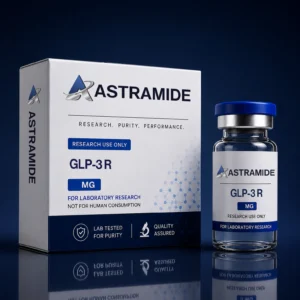
GLP-3RLot 2026/02 · May 8, 2026
>99.9%purity by HPLC-UV/MS
90%Minimum 98.0%100%
Identity: Confirmed by mass specEndotoxin: Below 0.5 EU/mL


 Pro Series
 Pro Series
 Pro Series