| Pcs | Single Vial, Pack of 10 |
|---|---|
| Strength | 10mg, 15mg, 20mg |
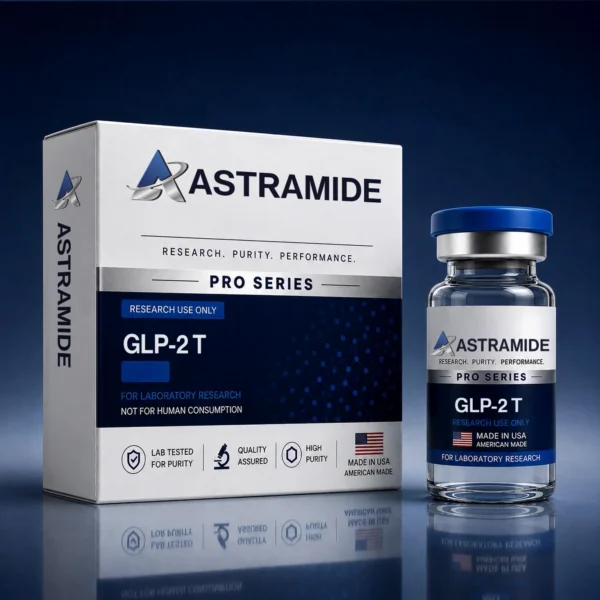
GLP-2T Pro
Pro Series
A synthetic dual agonist peptide at the GIP and GLP-1 receptors
CAS 2023788-19-2C₂₂₅H₃₆₀N₆₂O₈₅4813.5 g/molLinear peptideLyophilized powder
Price range: $109.00 through $1,431.00
Why the Pro Series costs more
- Synthesized in the USA. Domestic ground and air only, no ocean freight.
- Released only above 99% HPLC purity.
- Its own lot and its own published certificate.
Ships from Austin, TexasUnited States only
Tested by an outside labNever in-house
Every lot publishedIncluding rejected lots
Same-day dispatchOn orders before 2pm ET
BATCH
VERIFICATION
VERIFICATION
LOT NUMBER
Black Cap
10 mg vial
IDENTITY
Confirmed
CHROMATOGRAPHIC PURITY
99.97%
NET CONTENT
9.80 mg
Quick reference
How to read this report
Same six keys on every Astramide product page. Only the values change.
1Lot numberMatch it to the number printed on your vial. If they differ, this report is not for your vial.
2IdentityMass spectrometry confirms the molecule is the one on the label. It conforms or it does not. There is no partial result.
3Chromatographic purityThe share of the material that is the target peptide. A purity figure quoted without a method is not a purity figure.
4Net contentHow much peptide is in the vial, as measured by the laboratory. A different question from purity.
5EndotoxinMeasured against a ceiling, not a floor. Sensitivity differs by laboratory, so results are not compared across labs.
6Laboratory, method, dateWho ran it, on what instrument, and when. A report with no named laboratory or no date is not a report.
Molecular profile
GLP-2T Pro, in structural terms.
- Sequence
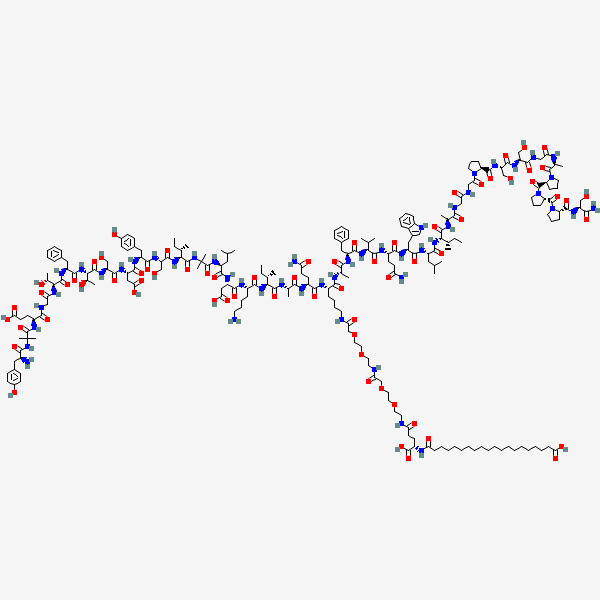
- GLP-2T is a 39-residue acylated analogue built on the human gastric inhibitory polypeptide (GIP) backbone. The native reference sequence, GIP(1-42), is: Tyr-Ala-Glu-Gly-Thr-Phe-Ile-Ser-Asp-Tyr-Ser-Ile-Ala-Met-Asp-Lys-Ile-His-Gln-Gln-Asp-Phe-Val-Asn-Trp-Leu-Leu-Ala-Gln-Lys-Gly-Lys-Lys-Asn-Asp-Trp-Lys-His-Asn-Ile-Thr-Gln One-letter representation: YAEGTFISDYSIAMDKIHQQDFVNWLLAQKGKKNDWKHNITQ The native peptide is 42 residues, corresponding to residues 52–93 of the human GIP precursor (UniProt P09681). The analogue supplied here is shorter at 39 residues and is C-terminally amidated. It carries alpha-aminoisobutyric acid at two positions in the N-terminal region, which resists dipeptidyl peptidase-4 cleavage, and a C20 diacid fatty-acid chain attached to a lysine through a gamma-glutamate unit and two AEEA spacers. Its receptor binding profile spans more than one class B receptor, which is the property that distinguishes it from single-receptor analogues of this family. Identity for each lot is confirmed by mass spectrometric match to the labelled compound and reported on the certificate of analysis published on this page.
- Molecular formula
- C₂₂₅H₃₆₀N₆₂O₈₅
- Molecular weight
- 4813.5 g/mol
- CAS number
- 2023788-19-2
- Structure type
- Linear peptide
- Primary molecular target
- Class B (secretin-family) G protein-coupled incretin receptorsReceptors in this family share a large extracellular domain that binds the C-terminal portion of the peptide ligand, while the N-terminal portion engages the transmembrane core to drive receptor activation. This two-domain binding model is established in the structural literature for the class.
- Physical form
- Lyophilized powder
- PubChem CID
- 166567236
GLP-2T is a 39-residue synthetic peptide analogue. It is C-terminally amidated and acylated, and is manufactured by solid-phase peptide synthesis. It is studied in experimental biology for incretin receptor signalling and receptor-level interactions.
Research profile
Where GLP-2T Pro appears in the literature.
Receptor Pharmacology; Structural Biology; Peptide Biochemistry; Analytical Chemistry
Research applications
- Published experimental use of class B incretin receptor ligands includes:
- Receptor binding and competition studies at recombinant receptors
- cAMP accumulation and β-arrestin recruitment assays
- Cryo-electron microscopy of peptide–receptor–G protein complexes
- Receptor selectivity profiling across related class B receptors
- Biased signalling and receptor internalisation studies
- Analytical characterisation of synthetic peptide analogues by HPLC and high-resolution mass spectrometry
- These areas describe experimental research contexts and do not establish therapeutic efficacy or safety in humans.
Experimental systems
- Experimental systems reported in this literature include:
- HEK293 and CHO cell lines stably expressing recombinant class B receptors
- Purified receptor–G protein complexes for structural determination
- Membrane preparations for radioligand binding
- Cell-free biophysical systems for peptide conformational study
- Isolated cell models used in published receptor pharmacology
Specific assays
- Assay formats reported in this literature include:
- Competition radioligand and fluorescent ligand binding assays
- HTRF and BRET cAMP accumulation assays
- β-arrestin recruitment and receptor internalisation assays
- Single-particle cryo-EM structure determination
- Reversed-phase HPLC with UV and mass spectrometric detection
- Circular dichroism for secondary structure assessment
Measured endpoints
- Endpoints reported in published research on this receptor class include:
- Binding affinity (Ki) and functional potency (EC50)
- Receptor selectivity ratios across related class B receptors
- cAMP accumulation and β-arrestin recruitment relative to reference ligand
- Receptor–ligand complex resolution and modelled contacts
- Chromatographic purity and mass accuracy for synthetic preparations
- Research use only. Not for human or animal consumption.
Mechanism and research context
What has been studied, and in what systems.
In preclinical and laboratory research models, GLP-2T has been examined across hormonal, cellular, and molecular research systems. Research focus includes:
GLP-1 receptor signaling pathways
GIP receptor interaction models
Dual incretin receptor activity
Cellular signaling mechanisms
These observations are limited to controlled experimental environments and support ongoing laboratory investigations.
These are published research systems. They do not describe approved clinical applications, and they do not establish efficacy or safety in humans.
Cited literature
Brubaker PL et al., 2002. Structure-function of the glucagon receptor family of G protein-coupled receptors: the glucagon, GIP, GLP-1, and GLP-2 receptors. Recept Channels. PMID 12529935. https://pubmed.ncbi.nlm.nih.gov/12529935/
Novikoff A et al., 2021. Spatiotemporal GLP-1 and GIP receptor signaling and trafficking/recycling dynamics induced by selected receptor mono- and dual-agonists. Mol Metab. PMID 33556643. https://pubmed.ncbi.nlm.nih.gov/33556643/
Dinsmore I et al., 2024. Potent and Protease Resistant Azapeptide Agonists of the GLP-1 and GIP Receptors. Angew Chem Int Ed Engl. PMID 39151024. https://pubmed.ncbi.nlm.nih.gov/39151024/
Evidence level
The structural and signalling pharmacology of class B incretin receptors is well characterised in the published structural biology literature. Statements on this page describe receptor biochemistry and analytical characterisation in experimental systems. No claim is made regarding outcomes in humans, and this material is supplied for laboratory research use only.
Handling and storage
As supplied
Lyophilized powder in a sealed vial. Held in laboratory-rated freezers from arrival to shipment.
Storage
Store per the conditions printed on the vial label. Avoid heat, moisture and repeated temperature cycling.
Handling
For qualified professionals in controlled laboratory environments, following validated laboratory procedures.
Frequently asked questions
About this compound and its batch data.
What purity did the GLP-2T Pro lot achieve?
Lot Black Cap was analysed by Freedom Diagnostics. It returned 99.97% purity by HPLC-UV, against the laboratory’s 98.0% specification. Pro lots are released only above 99%. Identity was confirmed by LC-MS match to the labelled compound. The full certificate, accession 2608270449, is published on this page. Every figure shown here is taken from it.
How much GLP-2T is in a GLP-2T Pro vial?
For the 10 mg vial, the laboratory measured 9.80 mg. That is 98% of the label claim. Astramide publishes the measured figure rather than the label claim, whether it falls above or below.
Was GLP-2T Pro tested for endotoxin?
Yes. Endotoxin was tested by the Limulus Amebocyte Lysate assay under USP <85>. Both replicates read at or below 0.05 EU/mL, the sensitivity limit of the assay. The result appears on the certificate published on this page.
What is the difference between GLP-2T and GLP-2T Pro?
GLP-2T Pro is part of the Astramide Pro Series. It is American-made, synthesized in the USA, and moves by domestic ground and air only, with no ocean freight. It is released under its own lot, and only when HPLC purity measures above 99%. The full certificate for each lot is published on this page. The standard GLP-2T is released under separate lots with separate certificates.
How should GLP-2T Pro be stored for research use?
As supplied, hold the lyophilized powder at -20°C, protected from light and moisture. Once reconstituted, store at 2 to 8°C and use within 14 to 30 days. Avoid repeated freeze-thaw cycles. Follow the handling procedures appropriate to your laboratory.
What is the difference between research-grade and pharmaceutical-grade GLP-2T?
These are separate classifications. Research-grade material is supplied for laboratory research use only. It is not for human or animal consumption. Pharmaceutical-grade is an FDA classification for drugs made for human use. Astramide supplies research-grade material only.
How can I verify this certificate independently?
The certificate was issued by Freedom Diagnostics under accession 2608270449. Quote that number to the laboratory directly. The same document is published here in full. Astramide does not summarise or reformat it.
Research use only
This product is intended strictly for in-vitro laboratory research conducted by qualified professionals. It is not intended for human or animal consumption, clinical use, or therapeutic application. The statements on this page have not been reviewed by the FDA. These research peptides are not intended to diagnose, treat, cure, or prevent any disease. Research Use Only.
COA library
Every lot we have tested
Search by batch number. Past lots stay published.
How we test
The analytical panel
What each method measures and the criterion each lot must meet.
Open Lab
Send us your peptides
Any vendor. Same lab. Your own Certificate of Analysis.
Ships from Austin, TexasUSPS or UPS, your choice
United States onlyFree shipping at $150 and over
Optional shipping insuranceAdded at checkout
Replacement or store creditOn approved claims. See refund policy.
Related products
-
 Pro Series
KPV – Pro
Price range: $44.99 through $400.00Select options This product has multiple variants. The options may be chosen on the product page -
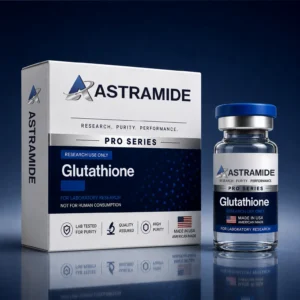 Pro Series
Glutathione – Pro
Price range: $74.99 through $700.00Select options This product has multiple variants. The options may be chosen on the product page -
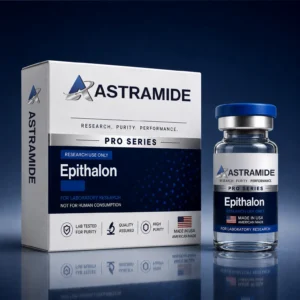 Pro Series
Epithalon – Pro
Price range: $44.99 through $400.00Select options This product has multiple variants. The options may be chosen on the product page -
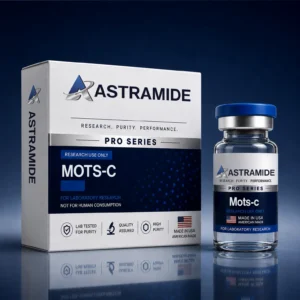 Pro Series
MOTS-c – Pro
Price range: $43.99 through $400.00Select options This product has multiple variants. The options may be chosen on the product page