

| Pcs | Single Vial, Pack of 10 |
|---|---|
| Strength | 50mg, 100mg |
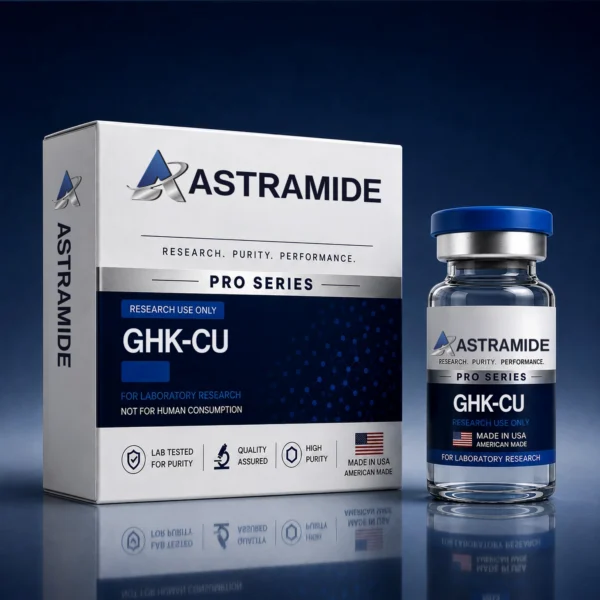
GHK-Cu – Pro
Pro Series
GHK-Cu, the tripeptide glycyl-L-histidyl-L-lysine in complex with copper(II)
CAS 89030-95-5C₁₄H₂₄CuN₆O₄403.9 g/mol3 amino acidsPeptide complexLyophilized powder
Price range: $55.00 through $850.00
Why the Pro Series costs more
- Synthesized in the USA. Domestic ground and air only, no ocean freight.
- Released only above 99% HPLC purity.
- Its own lot and its own published certificate.
Ships from Austin, TexasUnited States only
Tested by an outside labNever in-house
Every lot publishedIncluding rejected lots
Same-day dispatchOn orders before 2pm ET
BATCH
VERIFICATION
VERIFICATION
LOT NUMBER
NHS-GHK100-20260828-01
100 mg vial
IDENTITY
Match (C14H24CuN6O4, 403.9 g/mol)
CHROMATOGRAPHIC PURITY
99%
NET CONTENT
100.087 mg (100.087% of 100 mg label claim)
Quick reference
How to read this report
Same six keys on every Astramide product page. Only the values change.
1Lot numberMatch it to the number printed on your vial. If they differ, this report is not for your vial.
2IdentityMass spectrometry confirms the molecule is the one on the label. It conforms or it does not. There is no partial result.
3Chromatographic purityThe share of the material that is the target peptide. A purity figure quoted without a method is not a purity figure.
4Net contentHow much peptide is in the vial, as measured by the laboratory. A different question from purity.
5EndotoxinMeasured against a ceiling, not a floor. Sensitivity differs by laboratory, so results are not compared across labs.
6Laboratory, method, dateWho ran it, on what instrument, and when. A report with no named laboratory or no date is not a report.
Molecular profile
GHK-Cu - Pro, in structural terms.
- Sequence
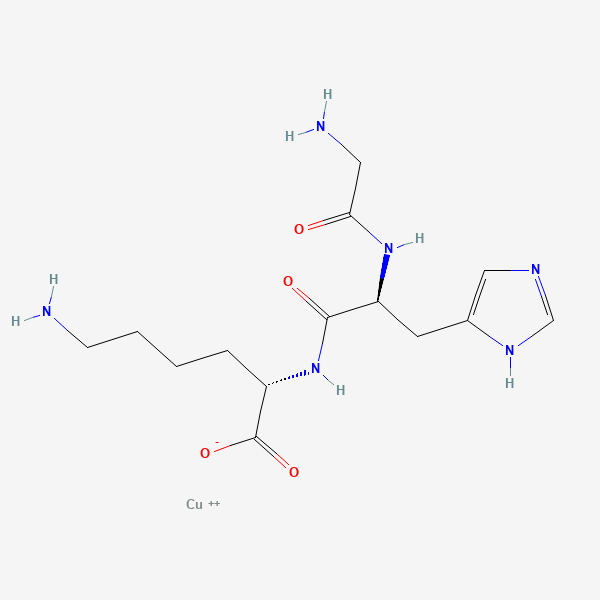
- Gly-His-Lys One-letter representation: GHK GHK is a three-residue sequence that occurs within the alpha-2 chain of human collagen I. The copper(II) ion is coordinated by the histidine imidazole nitrogen, the glycine amino nitrogen and the deprotonated amide nitrogen of the glycyl-histidyl bond, giving the square-planar GHK-Cu complex.
- Molecular formula
- C₁₄H₂₄CuN₆O₄
- Molecular weight
- 403.9 g/mol
- CAS number
- 89030-95-5
- Peptide length
- 3 amino acids
- Structure type
- Peptide complex
- Primary molecular target
- Copper(II) coordination by the GHK tripeptide (Bossak-Ahmad et al., 2020). Fibroblast culture studies have examined expression of SPARC, decorin and collagen genes and copper-dependent enzymes such as lysyl oxidase (Pickart et al., 2008). Studies of the free peptide and of the copper complex report different profiles.
- Physical form
- Lyophilized powder
- PubChem CID
- 71587328
GHK-Cu is a coordination complex of the tripeptide glycyl-L-histidyl-L-lysine (Gly-His-Lys) with a copper(II) ion. The copper is bound by the glycine amino nitrogen, the deprotonated amide nitrogen of the glycyl-histidyl bond and the histidine imidazole nitrogen. Its molecular formula is C14H24CuN6O4 and its molecular weight is 403.9 g/mol. It is supplied as a violet to purple lyophilized powder.
Research profile
Where GHK-Cu - Pro appears in the literature.
Matrix Biology; Bioinorganic Chemistry; Cell Biology; Dermatological Science; Coordination Chemistry
Research applications
- Published experimental use of GHK-Cu includes:
- Copper coordination and stability constant determination
- Fibroblast gene expression profiling by microarray and RT-PCR
- Collagen and glycosaminoglycan synthesis quantification in culture
- Metalloproteinase and TIMP expression studies
- Liposomal and hydrogel encapsulation and release studies
- Comparative studies of GHK against the GHK-Cu complex
- These areas describe experimental research contexts and do not establish efficacy or safety in humans.
Experimental systems
- Experimental systems reported in the GHK-Cu literature include:
- Primary human dermal fibroblast cultures
- Human keratinocyte cultures
- Reconstructed human skin equivalents
- Cell-free copper titration and spectroscopic systems
- Liposome and hydroxyapatite microsphere carrier systems
- Rodent models used in published preclinical work
Specific assays
- Assay formats reported in the GHK-Cu literature include:
- UV-visible and circular dichroism spectroscopy of copper complexation
- Potentiometric titration for stability constant determination
- Capillary electrophoresis with ICP-MS/MS detection
- RT-PCR and microarray gene expression analysis
- Hydroxyproline assay for collagen quantification
- Zymography for metalloproteinase activity
Measured endpoints
- Endpoints reported in published GHK-Cu research include:
- Copper(II) binding stability constants
- SPARC, decorin and collagen gene transcript levels
- Collagen and glycosaminoglycan concentration in culture
- Metalloproteinase and TIMP expression ratios
- Encapsulation efficiency and permeation flux in carrier studies
- Research use only. Not for human or animal consumption.
Mechanism and research context
What has been studied, and in what systems.
GHK was first described as a component of human plasma, and most later work examines it as its copper(II) complex (Pickart et al., 2008). Published research falls into three groups.
Coordination chemistry studies have measured how GHK binds copper(II) and how GHK-Cu forms ternary complexes with other small molecules, such as cis-urocanic acid (Bossak-Ahmad et al., 2020).
Cell culture studies, mostly in fibroblasts, have measured gene transcript levels and the synthesis of collagen and glycosaminoglycans in the presence of GHK-Cu (reviewed by Pickart et al., 2008).
Formulation studies have examined liposomal carriers for the complex, measuring encapsulation efficiency and release (Dymek et al., 2023).
These studies describe chemical, cell and animal systems. They do not describe effects in people.
These are published research systems. They do not describe approved clinical applications, and they do not establish efficacy or safety in humans.
Cited literature
Pickart L et al., 2008. The human tri-peptide GHK and tissue remodeling. J Biomater Sci Polym Ed. PMID 18644225. https://pubmed.ncbi.nlm.nih.gov/18644225/
Bossak-Ahmad K et al., 2020. Ternary Cu(II) Complex with GHK Peptide and Cis-Urocanic Acid as a Potential Physiologically Functional Copper Chelate. Int J Mol Sci. PMID 32867146. https://pubmed.ncbi.nlm.nih.gov/32867146/
Dymek M et al., 2023. Liposomes as Carriers of GHK-Cu Tripeptide for Cosmetic Application. Pharmaceutics. PMID 37896245. https://pubmed.ncbi.nlm.nih.gov/37896245/
Evidence level
Published GHK-Cu research consists largely of in vitro cell culture studies, bioinorganic coordination chemistry, and preclinical animal work. Controlled human clinical evidence is limited. Findings described on this page are drawn from the cited literature and describe experimental observations only.
Handling and storage
As supplied
Lyophilized powder in a sealed vial. Held in laboratory-rated freezers from arrival to shipment.
Storage
Store per the conditions printed on the vial label. Avoid heat, moisture and repeated temperature cycling.
Handling
For qualified professionals in controlled laboratory environments, following validated laboratory procedures.
Frequently asked questions
About this compound and its batch data.
What is GHK-Cu?
GHK-Cu is the tripeptide glycyl-L-histidyl-L-lysine (Gly-His-Lys) in complex with a copper(II) ion. Its molecular formula is C14H24CuN6O4, its molecular weight is 403.9 g/mol and its CAS number is 89030-95-5, as listed on the current certificate. The GHK sequence also occurs within the alpha-2 chain of human collagen I. It is supplied as a lyophilized powder. Sold for research use only.
What has GHK-Cu been examined for in published research?
Researchers have measured how GHK, copper(II) ions and cis-urocanic acid combine into a ternary complex, and proposed that complex as a physiologically relevant copper species (Bossak-Ahmad et al., 2020, PMID 32867146). This is coordination chemistry work. Astramide makes no claim about outcomes in humans.
What purity does the current GHK-Cu Pro lot reach?
The current GHK-Cu Pro lot is NHS-GHK100-20260828-01. HPLC analysis by pH Solutions measured chromatographic purity of 99%, and identity was reported as a match. The results are on certificate 260903-899-NHS-2, reported September 29, 2026, for the 100 mg vial. The full certificate is published on this page and in the Astramide certificate library, where it can be looked up by the lot number printed on the vial.
How much GHK-Cu is in the vial?
The current certificate is for the 100 mg vial, lot NHS-GHK100-20260828-01. pH Solutions measured a net content of 100.087 mg per vial, which is 100.087% of the label claim. The figure is published exactly as the laboratory reported it. GHK-Cu Pro is also sold in a 50 mg vial. The certificate for the 50 mg vial is not yet published on this page.
How is Astramide's GHK-Cu Pro tested?
This lot was tested by pH Solutions, an ISO/IEC 17025:2017 accredited laboratory in Monrovia, California. The certificate reports identity, chromatographic purity by HPLC, net content, appearance, water content by Karl Fischer, pH, water activity, a microbial panel, heavy metals, residual solvents, sterility and mycotoxins. Endotoxin was not reported on this certificate. Every result is published on this page.
How should GHK-Cu be stored for research use?
Store the lyophilized powder at -20°C, sealed and away from light. Avoid repeated temperature cycling and moisture. Once reconstituted for laboratory work, hold the solution at 2 to 8°C and use it within 14 to 30 days. Astramide keeps every lot in laboratory-rated freezers from arrival until dispatch. Handle only in a controlled laboratory setting.
What is the difference between research-grade and pharmaceutical-grade GHK-Cu?
These are separate classifications. Research-grade material is supplied for laboratory research use only and is not manufactured, tested or released under the regulatory framework that governs drugs for human use. Pharmaceutical-grade is an FDA classification for human-use products. Astramide supplies research-grade material exclusively and does not represent it as pharmaceutical-grade.
Is GHK-Cu the same as GHK?
No. GHK is the free tripeptide Gly-His-Lys. GHK-Cu is that tripeptide coordinated to a copper(II) ion through the histidine, the glycine amino group and the glycyl-histidyl amide. The two are distinct materials and are not interchangeable in an experiment.
What is the difference between GHK-Cu and GHK-Cu Pro?
GHK-Cu Pro is part of the Astramide Pro Series. It is American-made, synthesized in the USA, and moves by domestic ground and air only, with no ocean freight. It is released under its own lot, and only when HPLC purity measures at or above 99%. The full certificate for each lot is published on this page. The standard GHK-Cu is released under separate lots with separate certificates.
Research use only
This product is intended strictly for in-vitro laboratory research conducted by qualified professionals. It is not intended for human or animal consumption, clinical use, or therapeutic application. The statements on this page have not been reviewed by the FDA. These research peptides are not intended to diagnose, treat, cure, or prevent any disease. Research Use Only.
COA library
Every lot we have tested
Search by batch number. Past lots stay published.
How we test
The analytical panel
What each method measures and the criterion each lot must meet.
Open Lab
Send us your peptides
Any vendor. Same lab. Your own Certificate of Analysis.
Ships from Austin, TexasUSPS or UPS, your choice
United States onlyFree shipping at $150 and over
Optional shipping insuranceAdded at checkout
Replacement or store creditOn approved claims. See refund policy.
Related products
-
 Pro Series
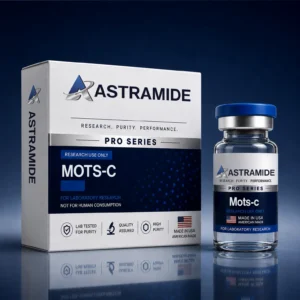
MOTS-c – Pro
Price range: $43.99 through $400.00Select options This product has multiple variants. The options may be chosen on the product page -
 Pro Series
TB-500 – Pro
Price range: $60.00 through $850.00Select options This product has multiple variants. The options may be chosen on the product page -
 Pro Series
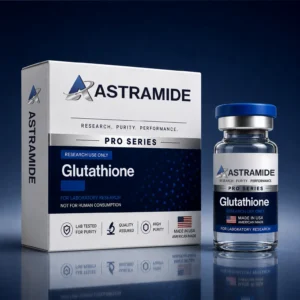
Glutathione – Pro
Price range: $74.99 through $700.00Select options This product has multiple variants. The options may be chosen on the product page -
 Pro Series
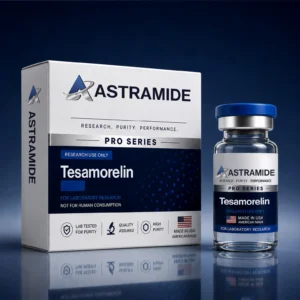
Tesamorelin – Pro
Price range: $120.00 through $970.00Select options This product has multiple variants. The options may be chosen on the product page